Buying an existing business can be a faster path to growth than starting from scratch. However, the price you agree on is only as good as the information behind it. Business purchase due diligence is how you test what the seller has told you before you commit.
In this guide, we walk through what legal due diligence involves, a practical checklist you can follow and the red flags that should make you pause.
What Is Business Purchase Due Diligence?
Due diligence is the investigation a buyer carries out before buying a business. It usually runs on three tracks at once:
- Financial due diligence: your accountant reviews the accounts, tax position and cash flow.
- Operational due diligence: you look at systems, suppliers, customers and key staff.
- Legal due diligence: your lawyer reviews ownership, contracts, liabilities and compliance.
This article focuses on the legal side. As business.gov.au points out, the goal is to identify and manage risks before you sign the contract.
When Does Due Diligence Happen?
Most buyers agree on the headline terms first, often in a heads of agreement. Due diligence then takes place before the final sale agreement becomes unconditional. Ideally, your contract should let you walk away or renegotiate if due diligence uncovers a serious problem.
Share Sale or Asset Sale?
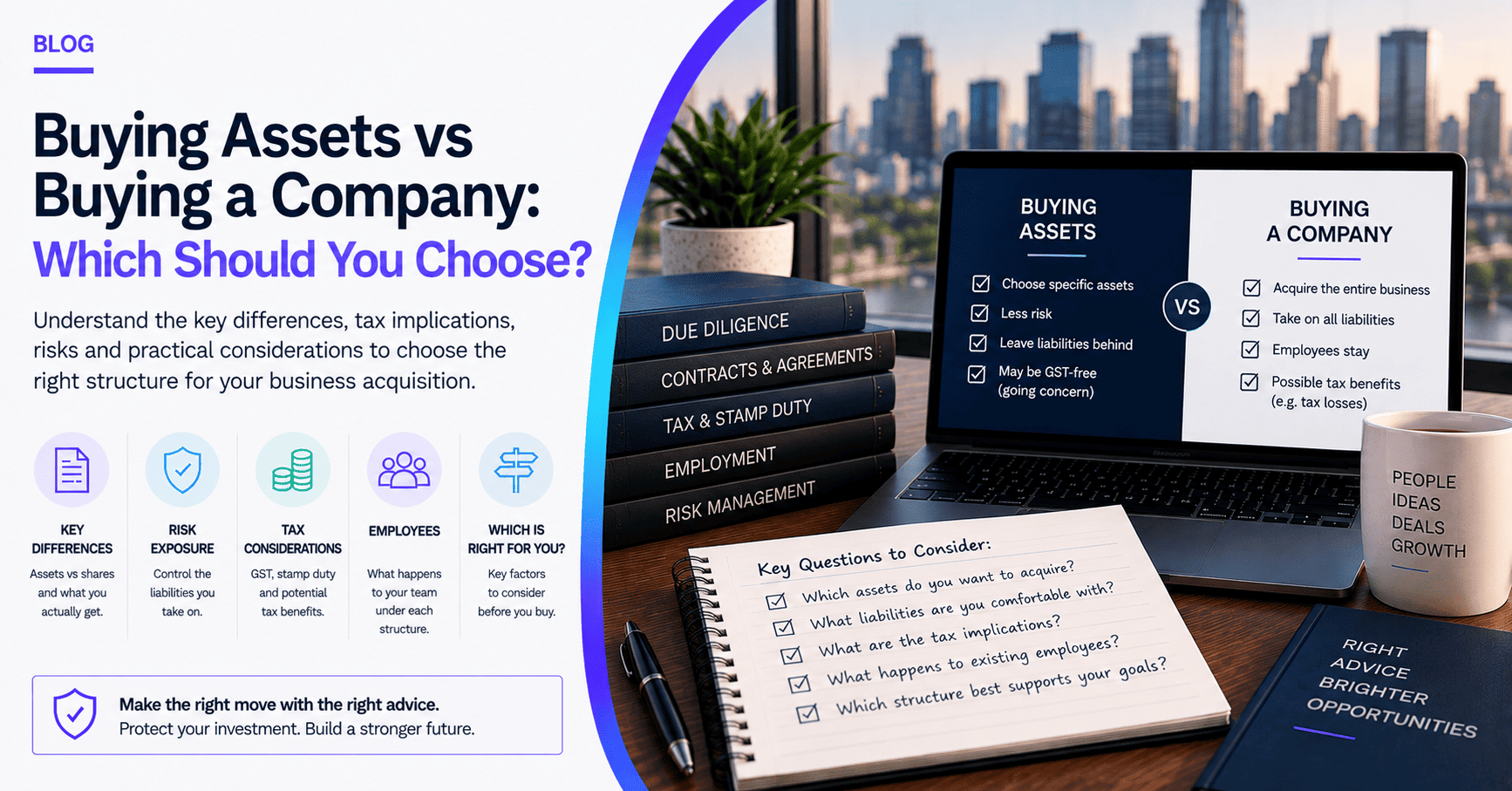
What you check depends on how you are buying. In a share sale, you buy the company itself, including its history and any hidden liabilities. In an asset sale, you buy selected assets, and most liabilities stay with the seller.
As a result, due diligence on a share sale usually needs to go deeper. Our guide on buying shares or assets explains the difference in more detail.
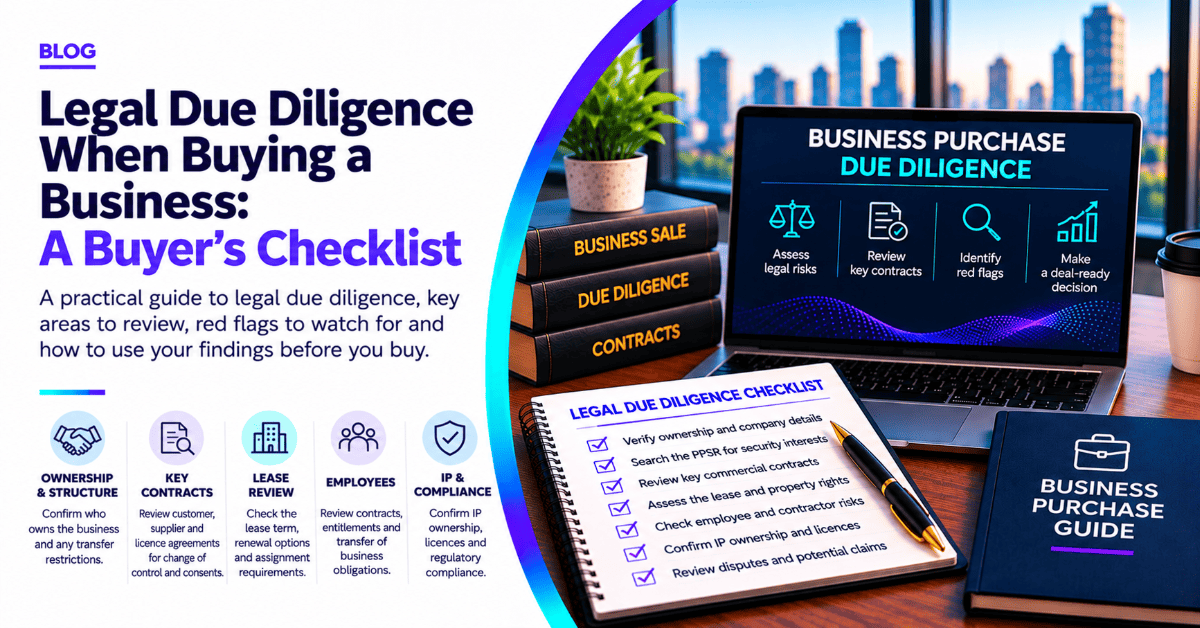
Legal Due Diligence Checklist
Every business is different, but the checklist below covers the areas we review most often.
Ownership and Structure
First, confirm exactly who owns the business and its assets. Check the company’s details on the ASIC register, including its directors and shareholders. If you are buying shares, review the constitution and any shareholders’ agreement for transfer restrictions.
Security Interests
Next, search the Personal Property Securities Register (PPSR). A lender or supplier may have a registered interest over equipment, stock or other assets. If so, make sure the seller releases it at or before completion. Otherwise, you could end up paying for assets someone else can claim.
Key Contracts
Review the contracts that drive the business’s revenue, such as customer, supplier, distribution and licence agreements. In particular, look for:
- change of control clauses that let the other party end the contract if ownership changes
- clauses that need the other party’s consent before the contract transfers to you
- exclusivity, minimum purchase or pricing terms that could limit you
- contracts that are about to expire
The Lease
For many businesses, the premises are critical. Check how long the lease has left, whether there are options to renew and whether the landlord must consent to an assignment. A commercial lease review also helps you spot rent reviews and make-good obligations that could affect your costs.
Employees
Staff often come across with the business. Under the Fair Work Act a transfer of business can mean you must recognise an employee’s past service for entitlements such as leave. So, check employment contracts, award coverage, accrued leave and any underpayment risks. It is also worth confirming that contractors are genuinely contractors rather than employees.
Intellectual Property
Confirm that the business actually owns its brand, website, software and other IP. Check trade mark registrations and domain names. If contractors or former staff created key IP, make sure the business holds a written assignment.
Licences and Compliance
Some businesses need licences, permits or registrations to operate. Check which ones the business holds and whether they can transfer to you. You should also ask about any regulator investigations or compliance issues.
Disputes and Claims
Finally, ask about current, threatened or past disputes. These might involve customers, suppliers, staff or regulators. Any significant claim could affect the value of the business or become your problem after completion.
Red Flags to Watch For
Some findings should make you slow down or rethink the deal. Common red flags include:
- the seller refuses to share key documents or keeps delaying
- revenue depends heavily on one or two customers with short contracts
- the lease is near its end with no option to renew
- key IP sits in the owner’s personal name
- staff records are incomplete or show possible underpayments
- the PPSR shows security interests the seller has not mentioned
None of these issues automatically ends a deal. However, each one needs an answer before you sign.
Using Your Findings
Due diligence is only useful if you act on what you find. Depending on the issue, you can:
- Ask the seller to fix the problem before completion.
- Negotiate a lower price or hold back part of the price.
- Add specific warranties and indemnities to the sale agreement.
- Make the deal conditional on third-party consents.
- Walk away if the risk is too high.
Taking these steps now is far cheaper than a business sale dispute later.
How Allied Legal Can Help
Our business sale and purchase lawyers run legal due diligence for buyers across a wide range of industries. We review the contracts, lease, employee arrangements and IP, then give you a clear report on the risks and how to manage them. Once you are ready to proceed, we can also draft and negotiate the sale agreement through our contracts and agreements team.
To discuss your purchase, call us on 03 8691 3111 or email hello@alliedlegal.com.au.
Frequently Asked Questions
1. How long does business purchase due diligence take?
It depends on the size of the business and how quickly the seller provides documents. For a small business, two to four weeks is common. Larger or more complex deals can take several months.
2. Do I need a lawyer for due diligence?
You can review some documents yourself. However, a lawyer can spot issues in contracts, leases and employment arrangements that are easy to miss. A lawyer can also help you turn those findings into protections in the sale agreement.
3. What is the difference between legal and financial due diligence?
Financial due diligence checks the numbers, such as revenue, profit and tax. Legal due diligence checks ownership, contracts, liabilities and compliance. Most buyers need both.
4. What happens if I find a problem during due diligence?
You can ask the seller to fix it, renegotiate the price, add protections to the contract or walk away. Your options depend on how serious the issue is and what your contract allows.
This article is provided for general information only and does not constitute legal advice. You should obtain legal advice specific to your circumstances before acting on any information contained in this article.