A letter from a regulator can stop a business in its tracks. Whether it comes from ASIC, the ACCC, the ATO or another agency, the first few days often shape how the matter ends. Regulatory investigations move quickly, and a poor early response can turn a manageable inquiry into a serious problem.
This guide explains how regulatory investigations usually start, what regulators can require, your rights and the practical steps to take straight away.
How Regulatory Investigations Start
Regulators in Australia oversee different parts of the economy. Some of the most active include:
- ASIC: companies, directors and financial services
- ACCC: competition and consumer law
- ATO: tax
- OAIC: privacy and data breaches
- Fair Work Ombudsman: wages and workplace rights
- State work health and safety regulators: workplace safety
An investigation might start with an informal phone call or letter. In other cases, it begins with a formal notice requiring you to hand over documents or attend an interview. Occasionally, a regulator may arrive with a search warrant.
It also helps to know what stage the matter is at. Regulators often start with surveillance, where they check compliance across a business or industry. If they suspect a breach, they may then open a formal investigation and gather evidence for possible enforcement action. Your lawyer can usually find out which stage applies, and that shapes how you respond.
What Powers Do Regulators Have?
Most regulators have strong compulsory powers. For example, ASIC’s Information Sheet 145 explains that it can require people and companies to produce documents, provide information and attend examinations.
Similarly, the ACCC can issue notices under section 155 of the Competition and Consumer Act 2010 (Cth). The ACCC’s basic guide for small businesses explains how these notices work and what to do if you receive one.
Failing to comply with a valid compulsory notice can be an offence. Giving false or misleading information can also lead to penalties, so accuracy matters as much as speed.
Initial Response Steps
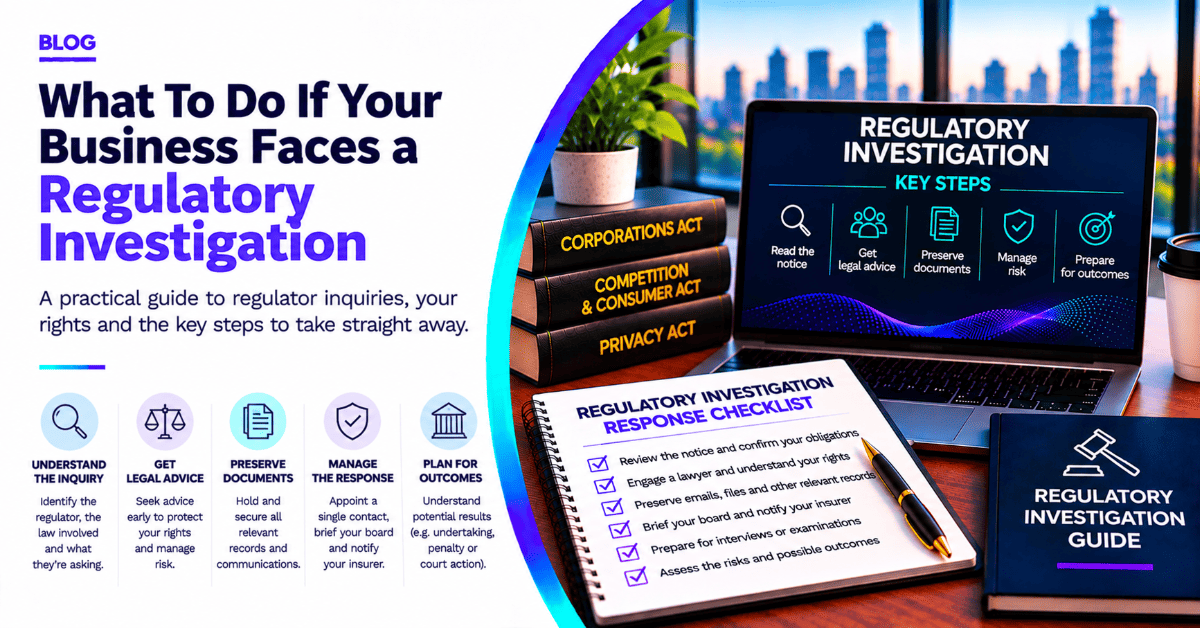
The first 48 hours matter. Here is how to approach them.
Read the Notice Carefully
First, identify which regulator sent it, which law it relies on and exactly what it asks for. Note the deadline. Also check whether the request is voluntary or compulsory, because your obligations differ.
Get Legal Advice Early
Next, speak to a lawyer before you respond. A lawyer can check whether the notice is valid, help you understand what the regulator is looking for and negotiate a realistic timeframe if the deadline is tight.
Appoint a Single Point of Contact
Choose one person to manage communication with the regulator, ideally together with your lawyer. This avoids mixed messages and accidental admissions.
Brief Your Board and Insurer
Tell your directors promptly. Directors have their own duties, and some may need separate advice. You should also check your insurance policies, because some policies cover the cost of responding to an investigation if you notify the insurer in time. If your company is listed, also consider whether the investigation triggers continuous disclosure obligations under ASX Listing Rule 3.1 and the Corporations Act.
Preserve Your Documents
As soon as you know about an investigation, stop any routine deletion of relevant records. This includes emails, chat messages, files on personal devices and backups.
Destroying or hiding documents after you learn of an investigation can be a serious offence. It can also badly damage your credibility with the regulator and the court. A written document hold notice to relevant staff is a simple and effective step.
Legal Professional Privilege
Legal professional privilege protects confidential communications and documents made for the dominant purpose of giving or getting legal advice, or for use in existing or reasonably anticipated legal proceedings. In many cases, it lets you withhold privileged documents from a regulator. For instance, the ACCC explains on its legal professional privilege page how it expects recipients of a notice to claim privilege.
However, privilege is easy to lose. To protect it:
- route sensitive internal reviews through your lawyers
- keep privileged advice within a small group
- avoid forwarding legal advice to third parties
- label privileged documents clearly, while remembering that a label alone does not create privilege
Attending an Interview or Examination
A regulator may ask you or your staff to attend an interview. If the interview is compulsory, you generally must attend and answer questions even if the answers might incriminate you. In some cases, an individual may get limited protection over how the regulator can later use their answers. For example, in an ASIC examination, an individual must claim the privilege against self-incrimination before answering to get that protection. Companies cannot claim the privilege against self-incrimination. The rules vary by regulator, so you need to claim any protection at the right time.
For this reason, never attend a compulsory examination without legal advice. A lawyer can attend with you, help you prepare and make sure you claim any protections correctly.
Managing Risk and Building Your Defence
While you respond, think about the bigger picture. A good strategy usually involves:
- Understanding the regulator’s concerns and the likely outcomes.
- Investigating internally, under privilege, to find out what actually happened.
- Fixing any ongoing problem quickly.
- Deciding whether to cooperate proactively, which some regulators take into account.
- Preparing for possible outcomes, such as an enforceable undertaking, infringement notice or court proceedings.
If the investigation concerns director conduct, individual directors may face personal exposure and should consider separate representation.
Frequently Asked Questions
1. Do I have to respond to a regulator’s letter?
It depends on whether the request is voluntary or compulsory. You must comply with a valid compulsory notice, and failing to do so can be an offence. For voluntary requests, get advice on whether and how to respond.
2. Can I refuse to hand over documents to a regulator?
Generally, no, if the regulator issues a valid compulsory notice. However, you can usually withhold documents protected by legal professional privilege, as long as the claim has a proper basis and you make it in the way the regulator expects, which often means providing a privilege schedule.
3. Should I talk to the regulator without a lawyer?
It is best not to. Even an informal conversation can shape how the regulator sees the matter. A lawyer can help you respond accurately and protect your position.
4. How long do regulatory investigations take?
It varies widely. Some inquiries close within weeks, while complex investigations can run for months or even years.
How Allied Legal Can Help
Our regulatory compliance lawyers help businesses respond to notices and investigations from ASIC, the ACCC, the OAIC and other regulators. We review notices, manage document production and privilege claims, prepare you for examinations and negotiate with regulators. If a matter proceeds to court, our corporate and commercial litigation team can defend you.
To discuss a regulatory investigation, call us on 03 8691 3111 or email hello@alliedlegal.com.au.
This article is provided for general information only and does not constitute legal advice. You should obtain legal advice specific to your circumstances before acting on any information contained in this article.