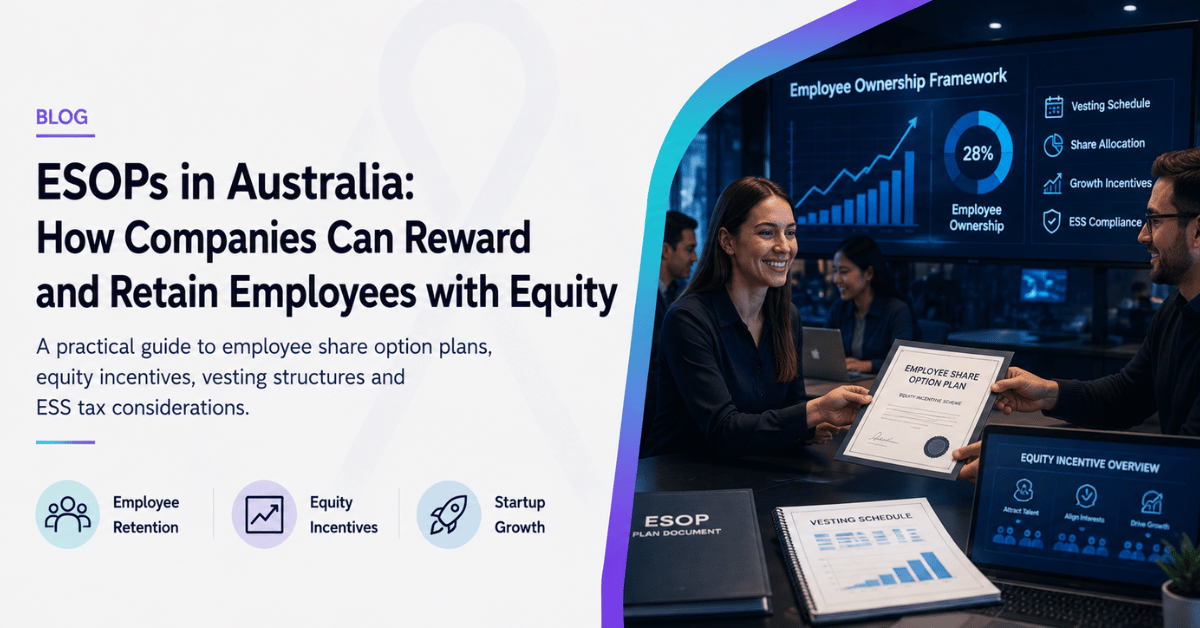
Employee equity is a way for a company to say “thank you” to hard-working employees – by giving them a small slice of the business instead of paying everything in cash. This matters a lot for startups and fast-growing companies. It helps them keep more cash in the bank while still rewarding the people helping them succeed. But an ESOP (Employee Share Option Plan) isn’t a form you can just download and fill in. The right plan depends on things like how big the company is, how much it’s worth, its growth plans, what its shareholders have already agreed, the tax rules that apply, and who its employees are.
Before picking a document, a company should ask a simpler question first: what do we want our employees to do differently, and what do we want them to get out of it? Getting that answer right comes before choosing the paperwork.
Why Companies Use ESOPs
Companies in Australia often set up ESOPs when they want employees to care about the business’s long-term success – not just collect a pay cheque, but genuinely feel like an owner. Instead of paying everyone fully in cash, the company lets employees share in its growth.
This is especially useful for young or fast-growing companies. They often can’t match the big salaries that larger, older businesses pay – but they can offer something else instead: a stake in the future.
- Recruitment of senior or strategically important employees;
- Retention of employees over a vesting period;
- Alignment between employees, founders and shareholders;
- Performance-based incentives linked to company growth;
- Cash preservation during earlier stages of growth; and
- A clearer incentive story for employees, investors and future acquirers.
Options, Shares and Other Incentives
There’s more than one way to give an employee a piece of the business. Which one is right depends on what the company wants to achieve – for tax reasons, fairness, and practicality.
Options
An option is a bit like a voucher. It gives an employee the right to buy shares later, at a price agreed today. Options are popular with startups because the employee doesn’t own anything yet – they simply have the right to buy in later, once the company (hopefully) is worth more.
Shares
Shares give an employee real ownership straight away. That can work well in some cases, but it can also create tricky tax and admin problems if it isn’t planned properly. Read our guide on shares vs options for Australian startups to see which fits your plan.
Rights and Phantom Equity
Some companies use “phantom equity” or “performance rights” instead. These let an employee earn a cash bonus that behaves like share ownership – without handing over real shares.
The Main Design Questions
1. Who Should Take Part?
Should every employee get equity, or just the senior team, key hires, or advisers? A plan for everyone works very differently – legally, financially and in how it’s communicated – to a plan for just a handful of people.
2. What Should Employees Receive?
Options, shares, rights, or a cash bonus tied to performance? Each choice affects tax, control of the company, and what employees will expect.
3. When Should It Vest?
“Vesting” simply means earning the right to keep something over time – a bit like a gym membership you only get to keep using if you keep showing up. A plan might vest based on time (say, a quarter every year), performance, hitting milestones, or a big event like a company sale. Learn more in our guide to vesting for startups. Whatever the rule is, it needs to be clear and fair – never vague or impossible to check.
4. How Will Employees Actually Get the Value?
This part is often forgotten. If a company isn’t listed on the stock exchange, an employee might hold shares or options with nowhere to sell them. A good plan explains what happens if the company is sold, lists on the stock exchange (an IPO), buys the shares back, or if an employee leaves – and how that affects shareholder ownership more broadly.
Tax Should Be Considered Early
Tax is one of the most important parts of getting an ESOP right. In Australia, the rules mostly sit in a part of the law called Division 83A of the Income Tax Assessment Act 1997.
In simple terms, a company needs to work out:
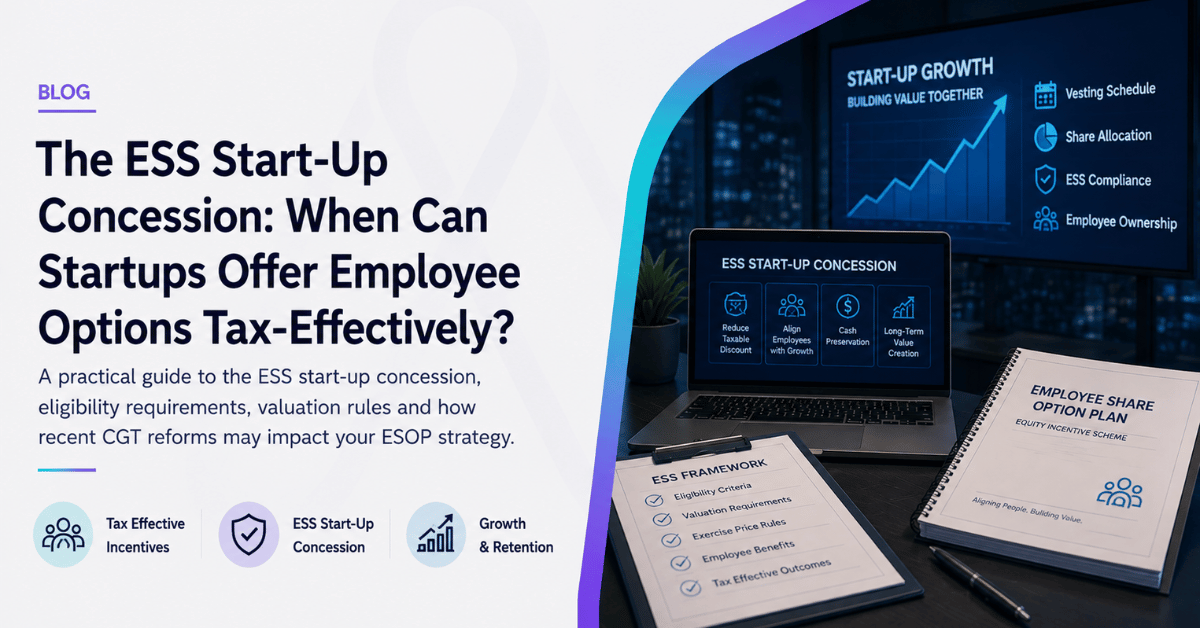
- Whether it qualifies for a special tax break for start-ups (called the ESS start-up concession)
- Whether the employee pays tax straight away, or
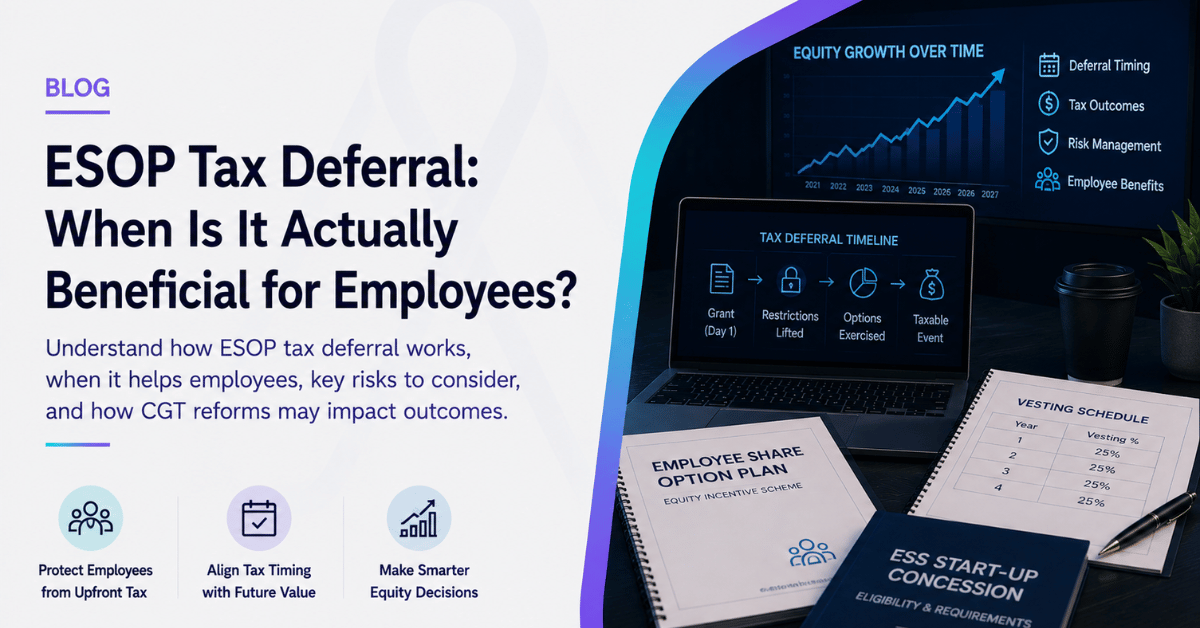
- Whether tax can be delayed until later (called tax deferral)
This isn’t just a box-ticking exercise – it changes whether employees actually see the ESOP as worthwhile, affordable and fair.
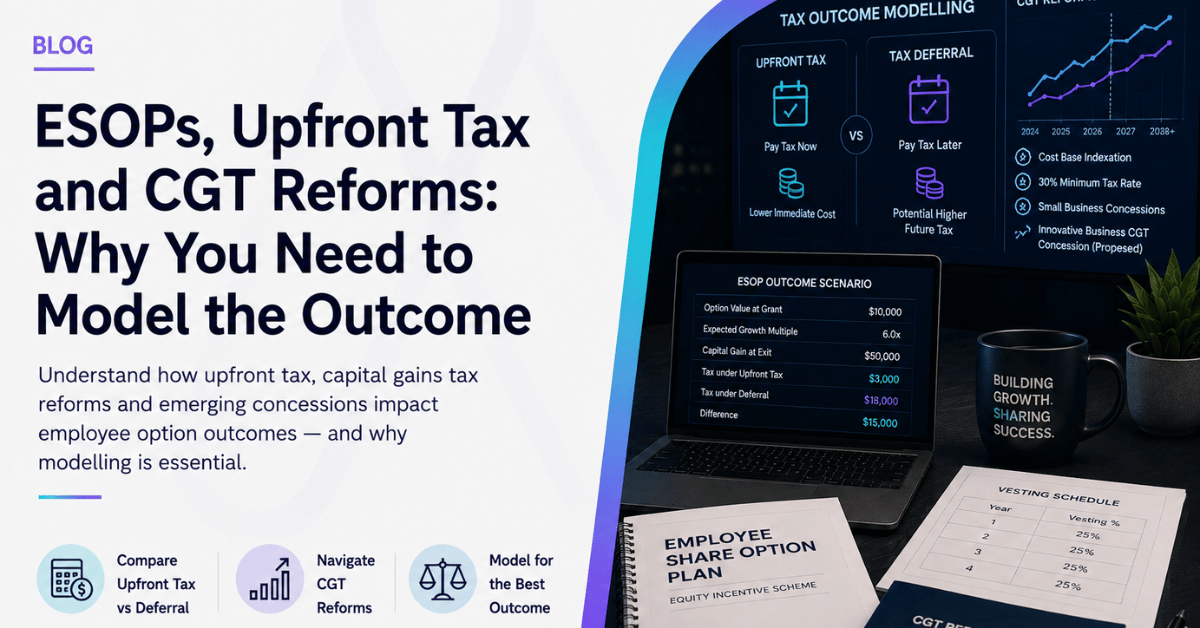
A quick note on upcoming changes: recent changes to capital gains tax (CGT), plus new rules for small businesses and start-ups, may change how much tax employees end up paying on their shares. Companies shouldn’t assume all capital gains will be taxed the same way after 1 July 2027.
Allied Legal’s Perspective
At Allied Legal, we think of an ESOP as two things at once: a legal document, and a way to motivate your team. A plan can be perfectly correct on paper and still fail – if employees don’t understand how it works, when they’ll be rewarded, how tax applies, and how they’ll eventually turn it into real money.
The best ESOPs are simple to explain, hold up under scrutiny, and fit the company’s future plans – its funding rounds, shareholder agreements, cap table, and its broader growth strategy.
Frequently Asked Questions
1. What is an ESOP in Australia?
An Employee Share Option Plan (ESOP) lets employees receive options, shares, or other rewards tied to the company’s value, so they can benefit as the company grows.
2. Do employees pay tax on ESOPs?
Usually yes, under the employee share scheme rules (Division 83A of the tax law). How much tax, and when, depends on how the plan is structured and whether any tax breaks apply.
3. What Is the ESS Start-Up Concession?
It’s a special tax break available to some start-ups and their employees, which can make an ESOP more tax-friendly – if the company and the scheme both qualify.
4. Who Should Receive ESOPs?
Founders, senior staff, key new hires and advisers are the most common recipients, because their work has the biggest impact on the company’s long-term success.
Key Takeaway
An ESOP can be a brilliant way to reward your team – but only if it’s designed properly. Before handing out equity, work out who should get it, what they should receive, when they earn it, how they’ll eventually cash it in, and which tax rules apply.
In our next article, we’ll look at the ESS start-up concession in more detail, and when it might give a better outcome than the usual tax deferral option.
Related reading: Is Your Start-Up Considering an Employee Share Scheme? · Early Stage Innovation Companies (ESIC)
This article is intended for general information only and does not constitute legal advice. Specific advice should be obtained before acting or relying on any information discussed above.