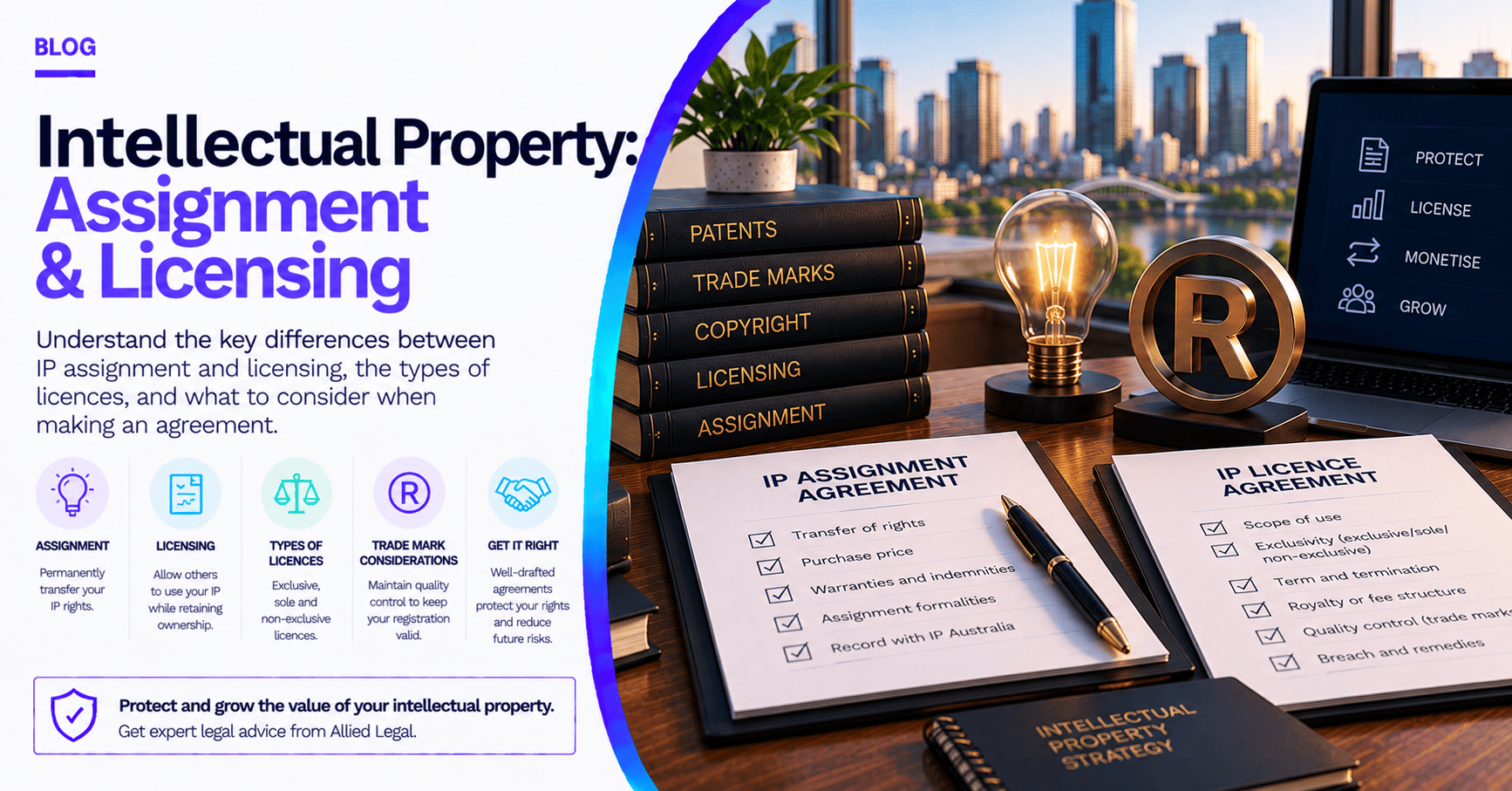
Intellectual property can be just as valuable as physical property, and sometimes more valuable. Many companies make their money almost entirely from intellectual property rights, through patents, trade marks, copyright, and other protections. Once that IP is properly protected, the next question is how to make money from it. Two options exist. You can transfer it permanently through an assignment, or let someone else use it through a licence. Both options need careful drafting to get right. Get support from an experienced intellectual property lawyer before signing either kind of agreement.
What Is Intellectual Property Assignment?
Under an IP assignment agreement, you permanently transfer some or all of your IP rights to the assignee. This usually happens in exchange for an agreed sum, in much the same way you would sell physical property. Once the assignment completes, you generally relinquish control, involvement, and any ongoing claim over the rights transferred. Different IP rights have different formality requirements for a valid assignment. A copyright assignment must be in writing, signed by or on behalf of the assignor. A patent or registered design assignment needs to go further. It must be in writing, and signed by both the assignor and the assignee. Trade mark assignments do not carry the same strict statutory writing requirement. Recording the assignment with IP Australia is still standard, sensible practice. It protects your ability to enforce the mark. It also keeps a clean, public record of ownership.
Copyright assignments carry one extra wrinkle. Moral rights, such as the right to be credited as the creator, belong personally to the individual author. These rights cannot be assigned away, even as part of a full copyright assignment. An author can consent to certain uses that might otherwise infringe their moral rights, but the rights themselves stay with them. Factor this into any agreement where the assignor is an individual creator, such as a contractor or former employee, rather than the company itself.
What Is Intellectual Property Licensing?
Under an IP licensing agreement, you keep ownership of your IP. You give another party permission to use some or all of your rights. This usually runs for a set period, in exchange for a fee or royalty. These agreements typically specify a termination date, and the process for ending the arrangement. Most licences also set out how the licensee may use the IP, and what happens if they breach those conditions.
Types of IP Licences
Licences generally fall into three categories, not just two. An exclusive licence means only the licensee can use the IP. This excludes everyone else, including you as the owner. A sole licence sits in between. You grant rights to one licensee, and agree not to license anyone else. However, you keep the right to use the IP yourself alongside them. A non-exclusive licence gives you the most flexibility. You can use the IP yourself. You can also grant the same or similar rights to multiple other parties at the same time.
Trade Mark Licensing and Keeping Your Registration Valid
Licensing a trade mark carries a specific risk worth understanding. Use by a licensee can count as use by you, the registered owner. This matters for defending your registration against a non-use removal application. However, this only works if the licensee genuinely qualifies as an “authorised user” under the Trade Marks Act 1995 (Cth). That generally means you actually exercise quality control over how the mark gets used. Simply saying so in the licence document is not enough. Without real control, licensed use may not count as your own use. In at least one Australian case, a trade mark was removed for non-use where a licence existed on paper, but the owner had not actually controlled how the mark was being used. Build genuine quality control into any trade mark licence from the start.
Assignment vs Licensing: Which Should You Choose?
There is no universally better option. It depends on your goals. Most IP holders want to keep control of their IP, so they choose licensing. This lets you determine exactly how your IP gets used. It can also produce ongoing income over time, potentially from multiple licensees at once. Assignment has its own advantages. Selling your IP outright removes it from your hands entirely. This suits a business sale, or a genuine exit from a field. One common misconception is worth correcting here. Assigning your IP does not mean you can never face a claim connected to it again. Most assignment agreements include warranties. These typically confirm you actually own the IP, and that it does not infringe anyone else’s rights. An indemnity usually applies if those warranties turn out to be false. Breaching those warranties can expose you to liability well after the assignment completes. You can also remain liable for anything that happened with the IP before the assignment, no matter who owns it afterward.
Getting Your Agreement Right
Whichever path fits your business, the agreement itself needs careful drafting. A licence needs to properly define scope, exclusivity, quality control, and what happens at termination. An assignment needs the right formalities for the type of IP involved. It also needs warranties that reflect what you can genuinely stand behind. Some businesses need to work out who actually owns their IP in the first place, before they can assign or license anything. Our guide on who owns your startup’s intellectual property is worth reading first if that sounds like you.
Frequently Asked Questions
1. What is the difference between IP assignment and IP licensing?
An assignment permanently transfers ownership of IP to someone else. A licence lets another party use your IP while you keep ownership, usually for a set time and a fee.
2. Does an IP assignment have to be in writing?
Yes, for copyright, patents, and registered designs. Copyright assignments need the assignor’s signature. Patent and design assignments need both the assignor’s and assignee’s signatures. Trade mark assignments should still be recorded with IP Australia.
3. What is the difference between an exclusive, sole, and non-exclusive licence?
An exclusive licence excludes everyone, including the owner, except the licensee. A sole licence allows only one licensee, but the owner can still use the IP themselves. A non-exclusive licence lets the owner grant rights to multiple licensees at once.
4. Can I lose my trade mark registration if I license it badly?
Yes. If a licensee’s use does not qualify as authorised use, your trade mark can become vulnerable to removal for non-use. This usually happens because you are not genuinely exercising quality control.
5. Am I still liable for my IP after I assign it?
You can be. Most assignment agreements include warranties and indemnities that survive the assignment. You can also remain liable for conduct involving the IP that happened before the assignment took effect.
6. Which is better for a startup, assigning or licensing IP?
It depends on your goals. Licensing suits a business that wants ongoing income and control. Assignment suits a business sale, or a genuine exit from a particular field or product.
Our team at Allied Legal regularly prepares and negotiates intellectual property assignment and licensing agreements. We work with startups and established businesses alike. We help you choose the right structure for your goals, and draft terms that actually protect you. For trade mark licences, we also make sure the agreement includes the quality control your registration depends on. Contact us at 03 8691 3111 or email hello@alliedlegal.com.au to get your next IP agreement properly drafted or reviewed.
This article is provided for general information only and does not constitute legal advice. You should obtain legal advice specific to your circumstances before acting on any information contained in this article.