
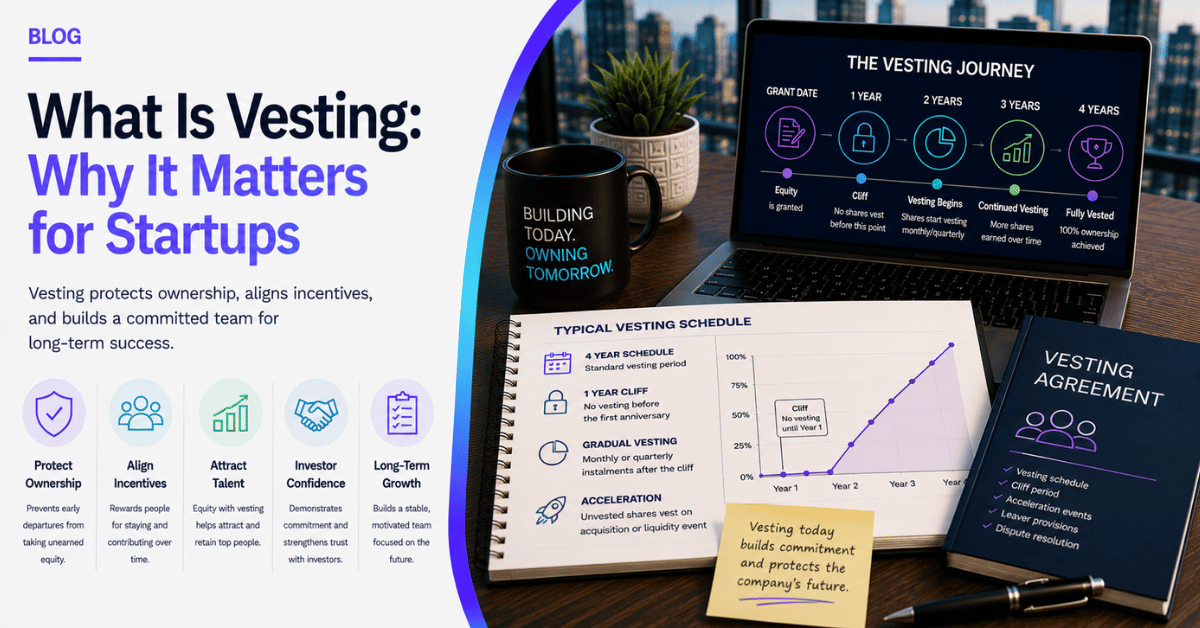
Vesting is one of the first equity concepts every Australian startup founder needs to understand. It is not just a financial technicality. It protects the company’s ownership structure, keeps the team motivated, and gives investors confidence that everyone is committed for the long haul.
This guide explains what vesting is, how a typical vesting schedule works, and why it matters whether you are a founder, an early employee, or an investor.
What Is Vesting?
Vesting is the process of gradually earning full ownership of shares or options over a set period, rather than receiving them outright on day one. It rewards people for staying with the company and contributing over time, rather than handing over equity with no strings attached.
For example, a founder or employee might be granted shares that vest over four years. They only earn full ownership of those shares by staying with the company for the entire period.
Why Vesting Matters for Startups
Vesting solves a specific problem: what happens to someone’s equity if they leave early. Without it, a co-founder or early employee who departs after a few months could still walk away holding a large stake in a company they no longer contribute to. That leaves less equity available to attract the next hire or investor, and can create lasting tension among the people who stayed.
Vesting also aligns incentives. Because equity is earned gradually, the people holding it are motivated to stay and keep contributing to the company’s success. For startups that cannot always compete on salary, a clear vesting schedule is often what makes an equity offer genuinely attractive to talented people considering the move.
How a Typical Vesting Schedule Works
Most Australian startups use a four year vesting schedule with a one year cliff. The cliff is the initial period before any shares vest at all. If someone leaves before their first anniversary, they leave with nothing. Once the cliff passes, the remaining shares usually vest in equal monthly or quarterly instalments over the rest of the schedule.
Some agreements include accelerated vesting, where unvested shares vest immediately if a triggering event occurs, most commonly an acquisition of the company. This protects the people who built the business from losing the value of shares they were still in the process of earning when a sale happens.
Time-Based vs Milestone-Based Vesting
Most vesting is time-based, where shares vest simply by staying with the company for a set period. This suits founders and employees whose contribution is ongoing rather than tied to a single deliverable.
Milestone-based vesting ties vesting to specific goals instead, such as hitting a revenue target or completing a product launch. This structure often suits advisors or consultants, whose value is more naturally measured by outcomes than by time served.
Should Founders Vest Too?
It is tempting for founders to assume vesting is only for employees, since they built the company from the start. In practice, most investors expect founders to vest as well. It protects the remaining founders if a co-founder leaves early, and it signals to investors that everyone’s commitment matches the company’s long-term goals. For a deeper look at how this works in practice, including the buyback mechanics used to reclaim unvested shares, see our guide to reverse vesting for startups.
Common Vesting Mistakes to Avoid
A few mistakes come up repeatedly. Setting a vesting period that is too short can undermine the whole point of the arrangement, since it stops protecting the company well before the business has matured. Leaving founders out of the vesting structure entirely is another common gap, one that tends to surface at the worst possible time, during a funding round or a co-founder dispute. And vague or undocumented terms create genuine risk. A vesting agreement should clearly set out the schedule, the cliff, and any acceleration provisions, so there is no ambiguity if a dispute arises later.
Setting Up a Vesting Agreement
Getting the structure right from the outset is far easier than fixing it after a dispute. A few steps help.
- Get legal advice early, so your agreement reflects Australian law and your startup’s specific structure.
- Set the schedule and cliff, with four years and a one year cliff as the standard starting point.
- Tailor terms by role, since founders, employees, advisors and consultants often suit different vesting structures.
- Document acceleration provisions clearly, particularly what happens if the company is acquired.
For founder-specific arrangements, including how unvested shares are reclaimed if someone leaves, our guide to founder vesting arrangements covers the detail this article does not.
Building a Committed Team
A well-structured vesting plan is a strategic tool, not just paperwork. It protects the company’s ownership, gives investors confidence, and helps build a team that is genuinely committed to the outcome. If you are setting up equity for the first time, it is worth getting this right from day one rather than adjusting it later once people are already relying on what was promised.
Frequently Asked Questions
1. What does vesting mean in simple terms?
Vesting means earning full ownership of shares or options gradually over time, rather than receiving them all at once. If someone leaves before their shares fully vest, they keep only the portion earned so far.
2. What is a vesting cliff?
A cliff is an initial period, usually one year, during which no shares vest at all. If someone leaves before the cliff ends, they leave with no equity. After the cliff, the remaining shares typically vest in regular instalments.
3. Do startup founders need to vest their own shares?
Most investors expect it. Founder vesting protects the remaining team if a co-founder leaves early, and reassures investors that every founder is committed for the long term, not just the ones who happen to stay.
4. What is the difference between time-based and milestone-based vesting?
Time-based vesting rewards staying with the company over a set period. Milestone-based vesting ties equity to achieving specific goals, such as a revenue target, and tends to suit advisors or consultants more than full-time team members.
5. What happens to unvested shares if a startup is acquired?
It depends on the agreement. Some vesting arrangements include acceleration provisions that vest all remaining shares immediately on acquisition, so this is worth confirming, or negotiating, before you sign.
Related Reading:
Useful Resources:
This article is provided for general information only and does not constitute legal advice. You should obtain legal advice specific to your circumstances before acting on any information contained in this article.