Before a big deal reaches a full contract, the parties often sign a short document that sets out the main terms. In Australia, that document is usually called a heads of agreement. It can save time and keep negotiations on track. However, a loosely drafted heads of agreement can also lock you into obligations you never expected.
In this guide, we explain what a heads of agreement is, when it binds you, what it should include and how to avoid the most common traps.
What Is a Heads of Agreement?
A heads of agreement is a short document that records the key commercial terms two or more parties have agreed in principle. Think of it as a roadmap for the final contract. It captures the headline points, such as price, scope, timing and key conditions, so both sides can start due diligence and drafting with confidence.
You may also see similar documents called a term sheet, letter of intent, memorandum of understanding or heads of terms. The label on the front page does not decide its legal effect. What matters is what the document says and how the parties behave after they sign it.
When Do Businesses Use One?
Businesses commonly use a heads of agreement for:
- buying or selling a business or its shares
- joint ventures and strategic partnerships
- supply, distribution and licensing arrangements
- commercial leases and property deals
- investment and acquisition negotiations
In each case, the document helps the parties confirm they agree on the big picture before they spend money drafting a long-form contract.
Is a Heads of Agreement Binding?
This is the question we hear most often. The short answer is that it depends on what the parties intended. A heads of agreement can be fully binding, partly binding or not binding at all.
The leading Australian case on this point is Masters v Cameron, a 1954 High Court decision. In that case, the court described three situations where parties reach an agreement but plan to prepare a formal contract later:
- The parties have agreed all the terms and want the deal to bind them now, but also want to restate those terms in a fuller document.
- Both sides have agreed all the terms, but performance of one or more terms depends on signing a formal contract.
- Neither side wants a binding deal until they sign a formal contract.
Later cases added a fourth category, where the parties want a binding deal immediately but expect to agree further terms down the track. For this reason, courts look closely at the wording, the level of detail and the parties’ conduct.
Binding, Non-Binding and Partly Binding
In practice, most heads of agreement are partly binding. The commercial terms, such as price, structure and timing, stay non-binding until both sides sign the final contract. Meanwhile, a handful of housekeeping clauses take effect straight away. These usually include:
- confidentiality
- exclusivity, sometimes called a “no-shop” clause
- costs
- governing law and jurisdiction
This approach gives both sides room to walk away if due diligence uncovers a problem. At the same time, it protects sensitive information you share during negotiations. If confidentiality is a major concern, consider signing a separate non-disclosure agreement before you share anything.
What Should a Heads of Agreement Include?
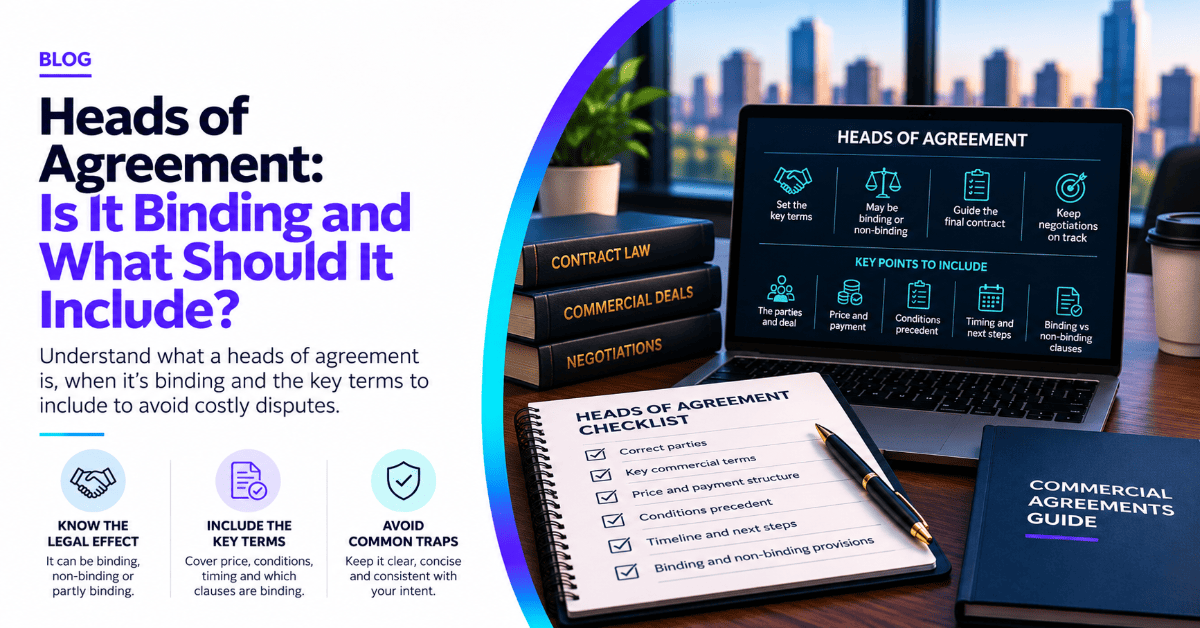
Every deal is different, but a well-drafted heads of agreement usually covers the points below.
The Parties and the Deal
Start by naming the correct legal entities. You can confirm each party’s details on ABN Lookup before you sign. Then describe the transaction in plain terms. For example, if you are buying a business, state whether you are buying the shares or only the assets. Our guide on whether to buy shares or assets explains why this choice matters.
Price and Payment
Set out the price or how you will calculate it. Next, explain any deposit, instalments, earn-outs or adjustments at completion.
Conditions Precedent
Conditions precedent are events that must happen before the deal goes ahead. Common examples include satisfactory due diligence, finance approval, board approval and landlord or third-party consents. List each condition clearly, along with who must satisfy it and by when.
Timing and Next Steps
Include target dates for due diligence, signing the long-form agreement and completion. A clear timeline keeps momentum and stops the deal from drifting.
A Clear Statement of Intention
Finally, state plainly which clauses bind the parties and which do not. A simple approach is to use two headings, “Binding Provisions” and “Non-Binding Provisions”. You can then repeat that intention inside the clauses themselves.
Common Traps to Avoid
Even a document marked “non-binding” can become binding if the rest of it points the other way. Here are the mistakes we see most often.
Too Much Detail
If your heads of agreement reads like a complete contract with nothing left to negotiate, a court may decide the parties meant it to bind them. Keep it to the key terms and leave the fine print for the final agreement.
Contradictory Language
Words like “must”, “will complete” and “agrees to purchase” suggest a binding promise. In contrast, words like “proposed”, “intends to” and “subject to contract” suggest the opposite. Mixing the two creates uncertainty and can lead to a contract dispute later.
Acting as if the Deal Is Done
Conduct matters. Suppose one party starts performing the deal, for example by handing over the keys, paying the full price or taking control of the business. A court may treat that behaviour as evidence of a binding agreement.
Forgetting the Binding Clauses
Exclusivity and confidentiality obligations can still bind you if the main deal falls through. So, check how long these clauses last and what happens if either side breaches them.
How Allied Legal Can Help
Our commercial lawyers regularly draft and review heads of agreement for business sales, joint ventures, supply arrangements and investments. We can help you decide which terms should bind you now and which should wait. We also make sure the wording reflects what you actually intend.
Once the deal progresses, our team can prepare the long-form agreement through our contracts and agreements service. If you are buying or selling, we can also guide you through the full business sale and purchase process.
To discuss your heads of agreement, call us on 03 8691 3111 or email hello@alliedlegal.com.au.
Frequently Asked Questions
1. Is a heads of agreement legally binding in Australia?
It can be. A heads of agreement may be fully binding, partly binding or non-binding, depending on its wording and the parties’ conduct. Most are partly binding, with confidentiality and exclusivity clauses taking effect immediately.
2. What is the difference between a heads of agreement and a contract?
A contract is a complete, legally enforceable agreement. A heads of agreement usually records the main terms only and sets the path to a final contract. However, if it contains all the essential terms and shows the parties meant it to bind them, a court may treat it as a contract.
3. Can I walk away after signing a non-binding heads of agreement?
Generally, yes, as far as the commercial terms go. You may still need to comply with any binding clauses, such as confidentiality, exclusivity or costs.
4. Should a lawyer review my heads of agreement?
Yes. It is much easier to fix the wording before you sign than to argue about it later. A lawyer can also check that the terms you agree now will work in the final contract.
This article is provided for general information only and does not constitute legal advice. You should obtain legal advice specific to your circumstances before acting on any information contained in this article.