
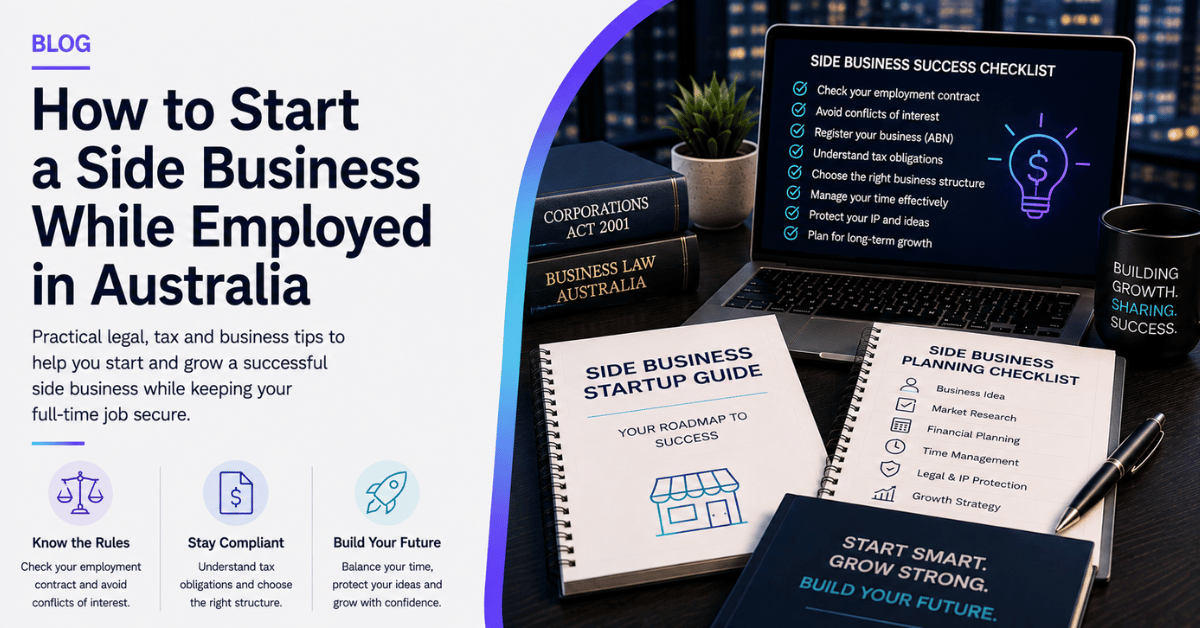
At Allied Legal, we’ve worked with countless founders who started a side business in Australia while holding down a full-time job. It’s a common and exciting path. Many people want to build something of their own, without giving up the stability of employment.
We wrote this guide for exactly that person. If you’re thinking about starting a side business, there are a few legal, tax and ethical considerations worth getting right from the start.
Can You Legally Start a Side Business While Employed in Australia?
Yes, you can. It’s completely legal to run a side business while employed, but there are things to keep in mind. Whether you’re starting a small e-commerce business, a consultancy, or a tech startup, the right path depends on your job, your goals, and how well you manage your time.
Legal Opinion: Employment Contracts Matter
Before anything else, read your employment contract carefully. Many contracts include clauses that could limit your ability to start a side business. Watch for:
- Non-compete clauses: if your side business competes with your employer, this can be a problem. Australian courts generally view non-compete clauses with scepticism, and will only enforce them if they’re “reasonable,” meaning limited in time, geography and scope, and genuinely needed to protect something like trade secrets or client relationships. Still, it’s worth getting this reviewed properly.
- Conflict of interest: starting a business that conflicts with your employer’s, or using company time to run it, can create real legal trouble.
- Intellectual property: if you work in a creative or technical role, your employer may actually own rights to anything you create, even outside work hours.
Always get legal advice to properly understand your contract before your side business gets off the ground.
Tax Considerations for Your Side Business
Starting a business comes with tax responsibilities. In Australia, income from your side business is taxed as part of your overall income, so it’s worth staying on top of this early.
Registering Your Business
If your side business is more than a hobby and earns income, you’ll need to register for an ABN through the Australian Business Register. You’ll need this to invoice customers, claim deductions, and more.
Tax Obligations
Income from your side business gets combined with your salary and taxed at your personal income tax rate. You’ll need to declare it in your annual tax return.
Lawyer’s tip: set up proper bookkeeping early, keeping personal and business finances separate makes tax time simpler and protects you from complications later.
Structuring Your Side Business: Choosing the Right Model
Choosing the right business structure is one of the most important early decisions. It depends on your goals, scale, and growth plans.
Sole Trader
The simplest structure. You operate as an individual, and all profits are added to your personal income tax. Ideal for small side businesses, freelancers and consultants.
Partnership
If you’re teaming up with someone else, a partnership lets you share profits, losses and responsibilities. Both partners share personal liability though, so it’s worth understanding what that means before you commit.
Company
If you’re planning for growth, a company structure offers limited liability protection and some tax advantages, but comes with more complex reporting and governance requirements. Read more about incorporating a company in Australia, and see our guide on which business structure is best for you.
Get legal and accounting advice before choosing, each structure carries real legal and tax consequences.
Balancing Full-Time Employment With a Side Business
Running a side business alongside a full-time job is a genuine juggling act. Time management is what makes or breaks it.
Ethical Considerations: Don’t Let Your Side Business Affect Your Job
Keep your work commitments front and centre, and avoid conflicts of interest:
- Make sure your side business doesn’t eat into your work hours or responsibilities.
- Don’t use your employer’s equipment, software or time for your business.
- If your side business is in the same industry as your job, be upfront with your employer. An honest conversation early can avoid bigger problems later.
If you’re unsure whether your side business creates a conflict of interest, talk to a lawyer, ethical and legal issues tend to grow if left unaddressed.
Time-Saving Strategies
- Set boundaries: allocate specific evening or weekend hours to your side business, treat it like a second job, but watch for burnout.
- Outsource where you can: as it grows, consider outsourcing marketing, bookkeeping or website management to free up time for strategy.
- Automate: use software to streamline invoicing, inventory and customer service.
Protecting Your IP and Business Ideas
If your side business involves innovation, technology, or creative work, protecting your intellectual property matters.
Intellectual property covers trademarks, copyright, patents and trade secrets:
- Trademark: consider registering a trademark for your business name, logo and products.
- Patent: a novel product or invention may be worth patenting to protect it from competitors.
- Copyright: applies automatically to original content like writing, artwork and software, no registration needed.
Talk to a lawyer about your IP strategy before launching, especially in a competitive space. It’s an investment, not just an expense.
Key Tips for Side Business Success
- Start small, think big: begin with a scalable idea that doesn’t need a huge upfront investment. Test on a small scale before expanding.
- Network: surround yourself with other entrepreneurs, mentors and professionals who can offer real support.
- Keep costs low: overspending early is one of the most common mistakes. Stay lean, and reinvest profits as you grow.
- Get legal protections in place: protect your personal assets, and get professional advice to guard against potential liabilities.
Lawyer’s tip: have an exit strategy in mind from the start, whether that’s selling, scaling, or winding down, having a plan protects your interests long-term.
Can a Side Business Work for You?
Yes, starting a side business in Australia is absolutely achievable, but it takes careful planning, legal awareness and solid time management. Get the structure right, stay on top of tax obligations, and stay transparent with your employer, and you can genuinely build something of your own without giving up the stability of full-time work.
Before you launch, it’s worth reading our guide on what to prepare during the planning stage of a startup.
Starting a side business takes patience, discipline and a good support network. If you’re serious about growing it, talk to a legal and financial professional early, it’s the smartest way to protect yourself and your business from avoidable pitfalls.
Frequently Asked Questions
1. Is it legal to start a side business while employed in Australia?
Yes, it’s completely legal, but check your employment contract first for non-compete, conflict of interest, or IP clauses that could limit what you can do.
2. Do I need an ABN to start a small side business?
If your side business is more than a hobby and earns income, yes, you’ll need to register for an ABN through the Australian Business Register.
3. Will my side business income affect my personal tax?
Yes, it’s added to your salary and taxed at your personal income tax rate, so you’ll need to declare it in your annual tax return.
4. What business structure is best for a side business?
Most side businesses start as a sole trader for simplicity. A company structure becomes worth considering once you’re planning for real growth or want limited liability protection.
5. Can my employer claim ownership of my side business ideas?
Potentially, if your employment contract includes IP clauses and your side business relates to your role, especially in creative or technical jobs. Always get this reviewed before you start.
Got questions? Reach out and our team at Allied Legal will help make sure you’re starting your side business compliantly and confidently.
Related reading: Legal Requirements and Steps to Starting a Small Business in Australia · Non-Compete and Non-Solicitation Clauses in Australia
This article is for general information only and doesn’t constitute legal advice. You should obtain advice specific to your circumstances before acting on anything discussed here.