
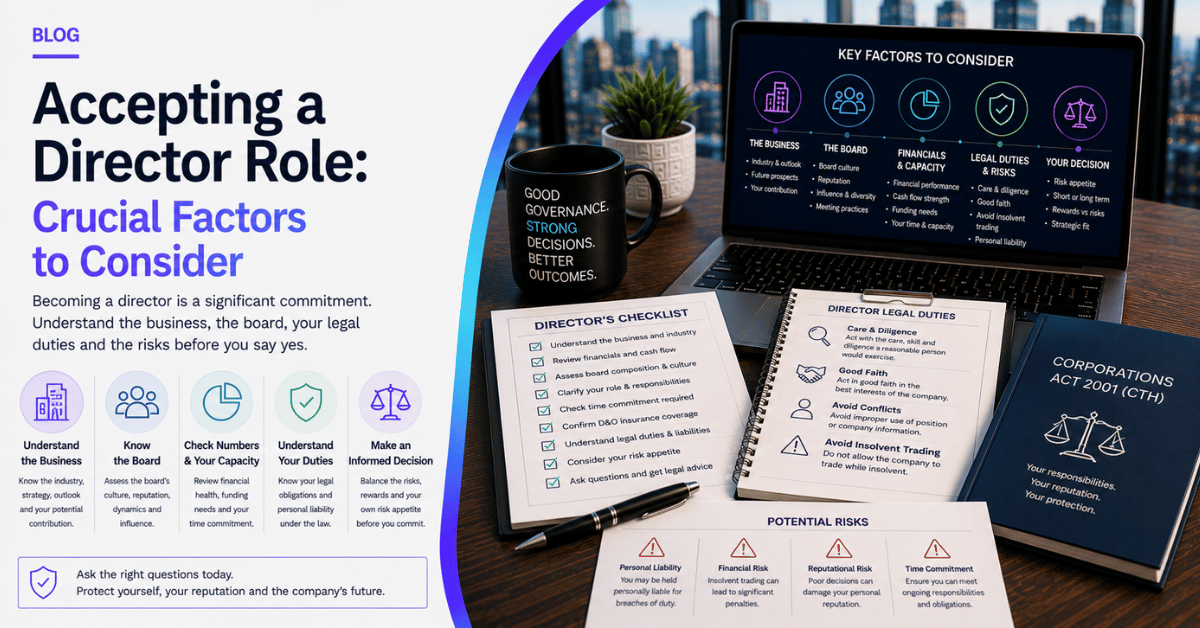
Being a director brings real responsibility and real risk. Before you agree to take on a directorship or understand what it means, it is worth understanding your own strengths and weaknesses, since directors often need to rely on other board members in areas outside their expertise. Think about what you can genuinely bring to the board, not just what the role can bring you.
This guide works through the questions worth answering before you say yes, and what to do once you are in the role.
Understand the Business Before You Say Yes
Start with the company itself. What is its core business, and are you genuinely interested in the industry? If possible, visit the company’s facilities before deciding. Consider whether the company’s work aligns with your personal values, what its future outlook looks like, and what contribution you can realistically make. It is also worth thinking through how industry innovation, including new technology, could affect the business over your time on the board.
Know the Board Before You Join It
Who else sits on the board matters as much as the company itself. Look at the other board members’ reputations, their risk tolerance, and whether you actually respect them. Ask how much genuine influence the board has over the business, and whether it functions well as a team.
Practical details matter too. How often does the board meet, and what actually happens in those meetings? Are minutes taken and shared with all members? Is there real diversity on the board? Understand the company’s ownership structure, who chairs the board and their leadership style, and how the chairperson and CEO work together. A board that does not function well as a team is a difficult place to add value, no matter how strong the company looks on paper.
Check the Numbers and Your Own Capacity
Look closely at the company’s financial performance and balance sheet. How strong are its cash flows, and does it depend on ongoing capital injections or further funding to stay afloat? How robust is its forecasting, and how often is it reviewed?
Then turn the questions back on yourself. What is your personal risk appetite, and are you approaching this role with a short-term or long-term perspective? What will your specific roles and responsibilities be, and how much time commitment is genuinely expected? This list is not exhaustive, but it covers the considerations that matter most before you commit.
Understand Your Legal Duties Before You Commit
Accepting a directorship also means accepting legal duties under the Corporations Act 2001 (Cth), and these apply personally, not just to the company. Directors must exercise care and diligence, act in good faith and in the company’s best interests, avoid improper use of their position or company information, and avoid letting the company trade while insolvent. Breaching these duties can expose a director to civil penalties, disqualification, or in serious cases, criminal liability.
Before accepting a role, it is worth confirming whether the company holds directors’ and officers’ (D&O) insurance, understanding the company’s financial position well enough to assess insolvency risk, and getting a clear picture of your personal liability before you sign on. Reviewing the company’s approach to director duties and governance generally is worth doing early, not after a problem arises.
Once You Have Accepted a Director Role
Treat the role like a professional job from day one. Participate in forums and discussions with other directors, attend educational courses, and read widely on governance and your industry. Look for mentorship opportunities in both directions, as a mentor and as a mentee.
Remember you are part of a team working toward the company’s success. Focus on improving collective performance, and bring your own experience, knowledge and judgement to the table. Stay alert to emerging challenges, from unexpected disruptions to macro shifts like environmental, social and governance expectations, and stay curious about how developments like artificial intelligence could affect both your role and the wider business. Do not limit yourself to your own area of expertise. Aim for a broader view, and keep expanding it.
How much you get involved will differ from company to company and will depend on your own circumstances. Review your board commitments regularly to make sure you can still meet them properly. The decision about your own capacity and commitment is always yours to make.
Red Flags Worth Pausing On
A few warning signs deserve extra scrutiny before you accept. Repeated reliance on emergency capital raises, resistance to sharing financial detail, high turnover among directors or senior management, and a chairperson unwilling to explain the board’s decision-making process are all worth investigating further rather than dismissing. None of these automatically rule out a role, but each one is a reason to ask more questions before you commit.
Frequently Asked Questions
1. What should I check before accepting a director role in Australia?
Look at the company’s core business, financial position, board culture and reputation, and your own risk appetite and time commitment, alongside the legal duties you will personally take on under the Corporations Act.
2. Can a director be personally liable for the company’s debts?
Yes, in certain circumstances, particularly if the company trades while insolvent and the director knew or should have known this was happening. This is one of the most important risks to understand before accepting a role.
3. Does a director need experience in the company’s industry?
Not necessarily. Directors often rely on fellow board members for specialist expertise, but you should still be genuinely interested in the industry and confident you can add real value to board discussions.
4. What questions should I ask about the board itself?
Ask how often the board meets, whether minutes are properly taken and shared, how the chairperson and CEO work together, whether the board is genuinely diverse, and whether you respect the other members you would be working alongside.
5. Should I check for directors’ and officers’ insurance before accepting a role?
Yes. Confirming whether the company holds D&O insurance, and understanding what it covers, is a practical step worth taking before you formally accept any directorship.
Related Reading:
- Understanding Director Liability
- Understanding and Complying with the Directors’ Duties
- Guide to Director Misconduct in Australia
- Types of Director Disputes
Useful Resources:
- Corporations Act 2001, s.180: Care and Diligence (AustLII)
- ASIC: Becoming a Company Director
- ASIC: Insolvency for Directors
Contact Allied Legal today to learn how we can assist you on your entrepreneurial journey. Call us on (03) 8691 3111 or email hello@alliedlegal.com.au.
This article is provided for general information only and does not constitute legal advice. You should obtain legal advice specific to your circumstances before acting on any information contained in this article.