As a business grows, raising capital becomes a practical necessity, and one of the most common ways to do it in Australia is by issuing new securities, such as shares or units, to investors. A subscription agreement is the document that sits at the centre of that process, whatever state the company is based in. Understanding what it covers, and how the process around it works, matters for any business preparing to raise funds, whether from a handful of early backers or a larger round of institutional investors.
What Is a Subscription Agreement?
A subscription agreement is a legally binding contract between a company and an investor. It sets out the terms under which the investor agrees to buy newly issued securities from the company, whether that is shares, units, or another form of equity. The agreement records the rights and obligations of both sides, making it one of the key documents in any capital raise.
How the Subscription Agreement Process Works
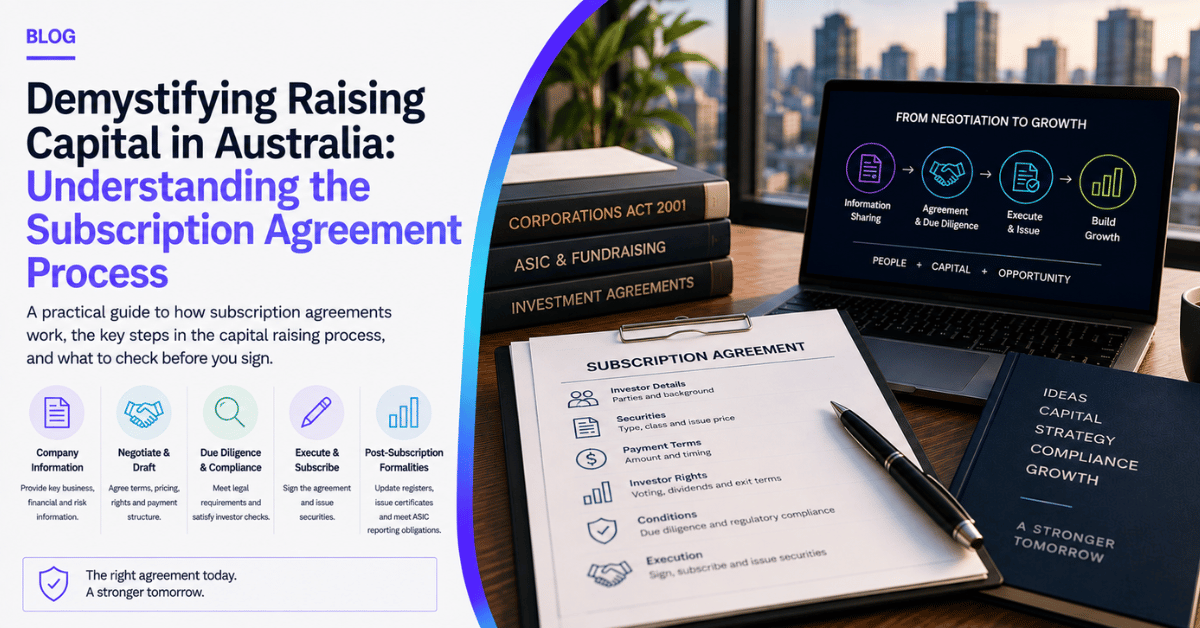
Sharing Company Information
Before signing anything, investors typically expect a detailed picture of the business. This usually comes through an offering or information memorandum, covering the company’s history, operations and management team, audited financial statements and forecasts, the risks the business faces, and the specific investment opportunity on offer, including how the funds will be used and the structure of the securities involved.
Negotiating and Drafting the Agreement
Once investors are interested, the subscription agreement itself gets negotiated and drafted. This covers the type of securities being offered, pricing, payment schedules, dividend and voting rights, and exit provisions. Getting the drafting right matters just as much as the commercial terms, since the agreement needs to reflect what was actually negotiated in clear, unambiguous language, and needs to comply with the relevant regulatory requirements.
Legal Compliance and Due Diligence
Raising capital in Australia means complying with the Corporations Act 2001 (Cth) and the other laws that govern investment offers, including the disclosure rules ASIC applies to fundraising. Both sides typically run due diligence in parallel. Investors look closely at the company’s financial records, operations, intellectual property and legal documents, while the company checks investor credentials and eligibility, particularly if it is relying on an exemption such as the small-scale offering exemption rather than a full prospectus.
Execution and Subscription
Once due diligence is complete and both sides are satisfied, the subscription agreement is signed. Investors provide the agreed funds, and the company issues the securities on the terms set out in the agreement, with both sides completing whatever compliance certifications the process requires.
Post-Subscription Formalities
The work does not end at signing. The company needs to update its share register to reflect the new shareholders and their holdings, issue share certificates as formal proof of ownership, and meet its ASIC reporting obligations within the required timeframes.
Where a Subscription Agreement Fits Alongside Other Documents
A subscription agreement rarely stands alone. It usually sits alongside a shareholders agreement, which governs the ongoing relationship between shareholders once the raise is complete, and it needs to be consistent with any pro rata or pre-emptive rights already in place for existing shareholders. Getting these documents to align is worth checking before a raise, not after, since a subscription agreement that contradicts an existing shareholders agreement can create real problems down the track.
What to Check Before You Sign
A few checks are worth making before either side signs a subscription agreement. Confirm that the securities and issue price match the negotiated terms exactly, and clearly identify the class of shares or units being issued. Also confirm that the agreement sets out all payment terms clearly, including any instalment arrangements or milestone-based payment structure. Confirm which disclosure exemption, if any, the company is relying on, and that the offer genuinely meets its conditions. And check the agreement against any existing shareholders agreement or constitution, so new investor rights do not conflict with commitments already made to earlier shareholders.
Taking the time to check these details before signing is far cheaper than resolving a dispute about them afterwards.
Getting It Right
A subscription agreement sits at the centre of many capital raisings in Australia. It gives companies and investors certainty about the terms of the investment. However, the legal and regulatory requirements behind these agreements are often complex. If a company uses a poorly drafted agreement, or fails to address a disclosure obligation or an existing shareholder right, it can create disputes and compliance issues long after the company receives the investment funds.
Because subscription agreements involve significant legal and regulatory complexity, companies should obtain legal advice before finalising them. A lawyer with experience in corporate law and securities regulation can ensure the agreement accurately reflects the negotiated terms, complies with the Corporations Act, and aligns with the company’s other governing documents.
Frequently Asked Questions
1. What is a subscription agreement?
It is a legally binding contract between a company and an investor that sets out the terms on which the investor agrees to buy newly issued shares, units or other securities from the company.
2. Is a subscription agreement the same as a shareholders agreement?
No. A subscription agreement covers the terms of a specific investment, while a shareholders agreement governs the ongoing relationship between shareholders after the raise is complete. Most companies need both.
3. Do I need a disclosure document as well as a subscription agreement?
It depends on the size and structure of the raise. Some offers need a prospectus or offer information statement under the Corporations Act, while smaller raises may qualify for an exemption, such as the small-scale offering exemption.
4. What happens after a subscription agreement is signed?
The company issues the agreed securities, updates its share register, issues share certificates, and meets its ASIC reporting obligations within the required timeframes.
5. Why does a subscription agreement need to align with existing shareholder rights?
If existing shareholders have pro rata or pre-emptive rights, a new subscription agreement needs to respect those rights. Overlooking them can create disputes with existing shareholders after the raise has already gone ahead.
Related Reading:
- ASIC Fundraising Requirements: A Comprehensive Guide
- Pro Rata Rights in Australian Equity Offerings
- Allied Legal’s Comprehensive Guide to Shareholders Agreements
Useful Resources:
Contact Allied Legal today to ensure a smooth and legally compliant fundraising journey for your company: (03) 8691 3111 or hello@alliedlegal.com.au.
This article is provided for general information only and does not constitute legal advice. You should obtain legal advice specific to your circumstances before acting on any information contained in this article.