When a customer will not pay an invoice or a supplier fails to deliver, a letter of demand is often the most effective next step. It puts your claim in writing, sets a clear deadline and shows the other side you are serious. In many cases, a well-drafted letter of demand resolves the matter before anyone sets foot in a courtroom.
This guide explains what a letter of demand is, when to send one, what to include and how to respond if one lands on your desk.
What Is a Letter of Demand?
A letter of demand is a formal letter asking another party to pay money they owe you, or to do something they promised to do, by a set date. It also explains what you will do if they ignore it, such as starting legal proceedings.
Most letters of demand relate to unpaid invoices. However, you can also use one for other disputes, including a breach of contract, the return of property or a failure to perform services.
Is a Letter of Demand Legally Required?
Australian law does not usually require you to send a letter of demand before you sue. Even so, courts expect parties to try to resolve disputes before litigation. In the Federal Court, for example, the party starting proceedings must file a statement setting out the genuine steps they took to resolve the dispute. A letter of demand is one of the simplest ways to show that effort, and it can affect who pays the legal costs later.
When Should You Send a Letter of Demand?
Timing matters. According to business.gov.au, you should send reminders with a correct invoice before you move to a letter of demand. A letter of demand is usually the right step when:
- the payment due date has passed and your reminders have gone unanswered
- the other party has refused to pay without a valid reason
- you have tried to negotiate and reached a dead end
- you are preparing to start court proceedings
Bear in mind that a letter of demand can harden positions. If the relationship is valuable, a phone call or meeting may be worth trying first.
Check the Limitation Period
You only have a limited time to start legal action. For most contract debts, the limitation period is six years in most states and territories and three years in the Northern Territory. The clock usually starts when you could first sue. If that deadline is close, act quickly.
What Should a Letter of Demand Include?
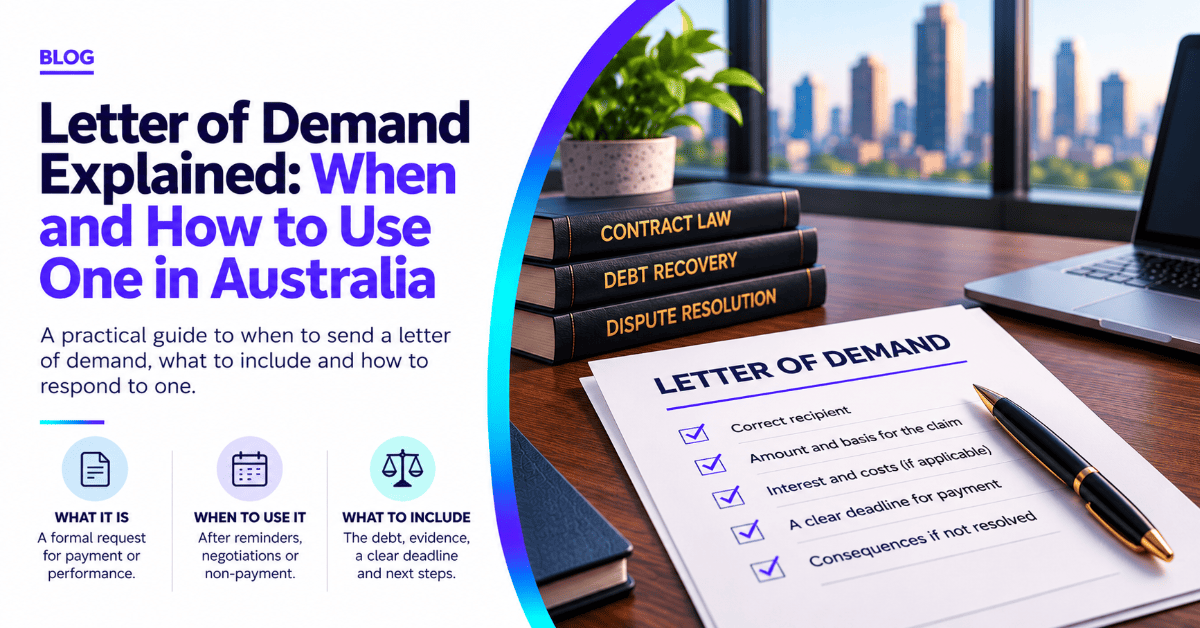
A strong letter of demand is clear, factual and professional. It should cover the points below.
The Right Recipient
First, confirm who actually owes you the money. The person you dealt with may not legally own the business. Check the entity name and ABN on ABN Lookup so your letter reaches the correct party.
The Amount and the Basis for It
Next, state exactly how much the other party owes and why. Refer to the contract, invoice numbers, dates and any part payments. Attach copies of the key documents.
Interest and Costs
If your contract allows you to charge interest or recover collection costs, say so. Otherwise, avoid adding amounts you have no right to claim.
A Clear Deadline
Give a specific date for payment. Seven to fourteen days is common for straightforward debts.
The Consequences
Finally, explain the action you will take if the recipient does not pay. This might include starting court proceedings, referring the debt to a collection agency or, for a company debtor, serving a statutory demand.
What You Must Not Do
A letter of demand should be firm, but it must stay within the law. The ACCC and ASIC debt collection guideline explains the conduct regulators consider unacceptable. In short, avoid:
- threatening action you do not intend to take or have no right to take
- making false or misleading statements about the debt or the consequences
- harassing the recipient with excessive contact
- threatening to report someone to police or a regulator to pressure them into paying
Breaching these rules can expose your business to penalties under the Australian Consumer Law. It can also weaken your position if the matter reaches court.
Letter of Demand vs Statutory Demand
A letter of demand is not the same as a statutory demand. A statutory demand is a formal notice under the Corporations Act that you can only serve on a company. The debt must be at least $4,000, due and payable, and not genuinely disputed.
If the company fails to pay, or to apply to set the demand aside, within 21 days, the law presumes the company is insolvent. Our guide to statutory demands explains how they work. In practice, a letter of demand usually comes first. A statutory demand is a more serious tool for clear, undisputed company debts.
How to Respond to a Letter of Demand
If you receive a letter of demand, do not ignore it. Instead, work through these steps:
- Read it carefully and check the amount against your records.
- Note the deadline.
- Gather your contract, invoices and correspondence.
- Decide whether you agree, partly agree or dispute the claim.
- Respond in writing before the deadline.
If you believe you owe part of the amount, consider making a settlement offer. A without prejudice offer lets you negotiate without the other side using that offer against you in court. For more complex disputes, alternative dispute resolution such as mediation can help both sides reach a practical outcome.
How Allied Legal Can Help
Our dispute resolution lawyers prepare letters of demand on Allied Legal letterhead, respond to demands on behalf of clients and negotiate settlements. If the matter does not resolve, our corporate and commercial litigation team can take your claim further.
To discuss a letter of demand, call us on 03 8691 3111 or email hello@alliedlegal.com.au.
Frequently Asked Questions
1. Does a letter of demand have to come from a lawyer?
No. You can send a letter of demand yourself. However, a letter on a law firm’s letterhead often carries more weight and can prompt a faster response.
2. How long should I give someone to respond?
Seven to fourteen days is typical for a simple debt. A longer period may suit complex claims or larger amounts.
3. What happens if the other party ignores my letter of demand?
You can then decide whether to start court proceedings or use a debt collection agency. If the debtor is a company and the debt is undisputed, you may also be able to serve a statutory demand.
4. Can I send a letter of demand by email?
Yes, unless your contract requires a particular method. Keep a record of when you sent it. For important matters, consider sending a copy by registered post as well.
This article is provided for general information only and does not constitute legal advice. You should obtain legal advice specific to your circumstances before acting on any information contained in this article.