
It’s a question we get asked often: can you force a shareholder to sell their shares if they won’t leave voluntarily? The short answer is, generally, no. Not unless specific conditions already exist in the company’s constitution. Not unless they exist in a shareholders’ agreement, or the rights attached to their share class.
This article focuses specifically on that scenario. For a broader look at exit options generally, including voluntary transfers and buybacks, see our full guide to managing shareholder exits.
How Can a Shareholder Exit a Private Company?
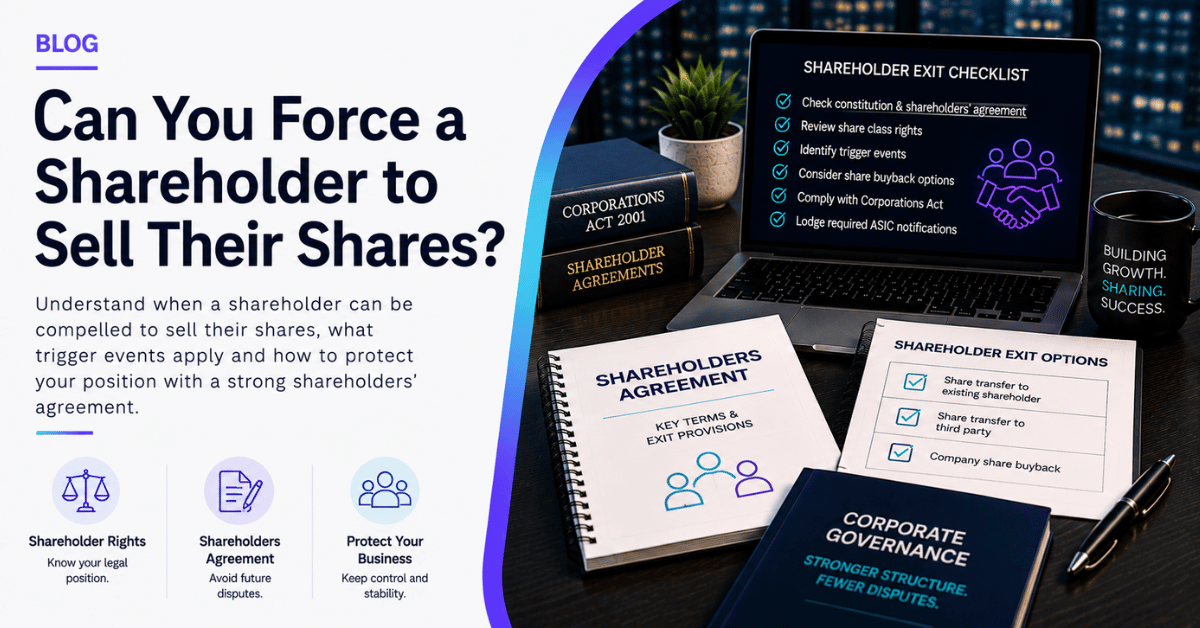
Once all parties agree, exiting a shareholder from a private company can happen a few ways. The exiting shareholder’s shares can be transferred, to an existing shareholder, multiple shareholders, or a new third party. Alternatively, the company itself can buy back the shares.
Each method carries different tax implications. So it’s worth getting advice on the structure before committing to one.
Once you’ve settled on an approach, document the exit properly, the price, the payment method, and any related matters like the shareholder resigning as an officer or employee. Compliance with the Corporations Act matters here too. Additionally, if the company is buying back shares, specific ASIC notifications need to be lodged within set timeframes before the buyback can go ahead. Our business sales and purchases team can help structure this properly.
Can You Force a Shareholder to Sell Their Shares?
This is where things get complicated. Generally, there’s no way to force a shareholder out of a company without their agreement. That is unless that right already exists somewhere. For example, in the company’s constitution, a shareholders agreement, or the terms attached to their specific class of shares.
If no such right exists and the shareholder won’t agree to leave, your options narrow considerably. You’d need to check whether the rights tied to their share class allow the company to redeem the shares. Alternatively, you should check whether they still owe unpaid capital on their shares, which could open the door to forfeiture. Outside of that, a pre-existing shareholders agreement or constitution that already provides for forced exit in specific circumstances is really your only reliable path.
What Trigger Events Allow a Forced Exit?
A well-drafted shareholders agreement will usually spell out “trigger events”, specific situations where other shareholders or the company can buy out a shareholder’s stake without needing fresh consent at the time. Common triggers include:
- the shareholder’s death or incapacity
- their employment with the company ending
- misconduct, or a serious breach of their obligations
Without these provisions built in ahead of time, forcing an exit becomes difficult, sometimes impossible, and can spiral into lengthy, expensive disputes, litigation, or in serious cases, winding up the company entirely. If a shareholder believes a forced exit is being handled unfairly, they may also have grounds for an oppressive conduct claim. This is exactly why getting this right from the outset matters for everyone involved.
Preventing Disputes With a Strong Shareholders Agreement
The best protection against these disputes is a properly drafted shareholders agreement from the very beginning, ideally before you ever need it. A solid agreement should set out clear trigger events that let other shareholders or the company buy out a shareholder’s stake when circumstances call for it.
Even where an exit is fully agreed and voluntary, having these terms locked in already, the price, the payment method, timing, all reduces the room for disagreement later. Our corporate governance team regularly helps startups and scaleups put these agreements in place before disputes ever arise. This is almost always cheaper and less stressful than resolving one after the fact.
Frequently Asked Questions
1. Can you force a shareholder to sell their shares without their agreement?
Generally, no, unless the right already exists in the company’s constitution, a shareholders agreement, or the rights attached to their share class.
2. What is a “trigger event” in a shareholders agreement?
A predefined circumstance, like death, incapacity, leaving employment, or misconduct, that allows other shareholders or the company to buy out a shareholder’s stake.
3. What happens if there’s no shareholders agreement and a shareholder won’t leave?
Your options are limited to checking share redemption rights or unpaid capital forfeiture. Without a pre-existing agreement, forcing an exit can be very difficult.
4. Does a share buyback need ASIC approval?
It generally needs the right shareholder approvals under the company’s constitution, plus ASIC notifications lodged within set timeframes.
5. How can I protect my company from shareholder exit disputes in future?
Put a properly drafted shareholders agreement in place early, with clear trigger events and exit terms defined before you ever need them.
Contact Us
If you have questions about preparing a shareholders agreement, or you’re facing a shareholder exit situation right now, our team at Allied Legal is ready to help.
Call us on (03) 8691 3111 or email hello@alliedlegal.com.au.
Key Takeaway
So, can you force a shareholder to sell their shares? Only if the right already exists in your constitution, shareholders agreement, or share class rights, there’s no general legal mechanism to do it otherwise. If you’re facing this situation without those protections in place, get advice early, and if you’re setting up a new company, build these provisions in now rather than after a dispute has already started.
Related reading: Managing Shareholder Exits: A Complete Guide · Mastering the 50/50 Split: Resolving Shareholder Disputes · Company Constitution & Replaceable Rules Explained
This article is for general information only and doesn’t constitute legal advice. You should obtain advice specific to your circumstances before acting on anything discussed here.