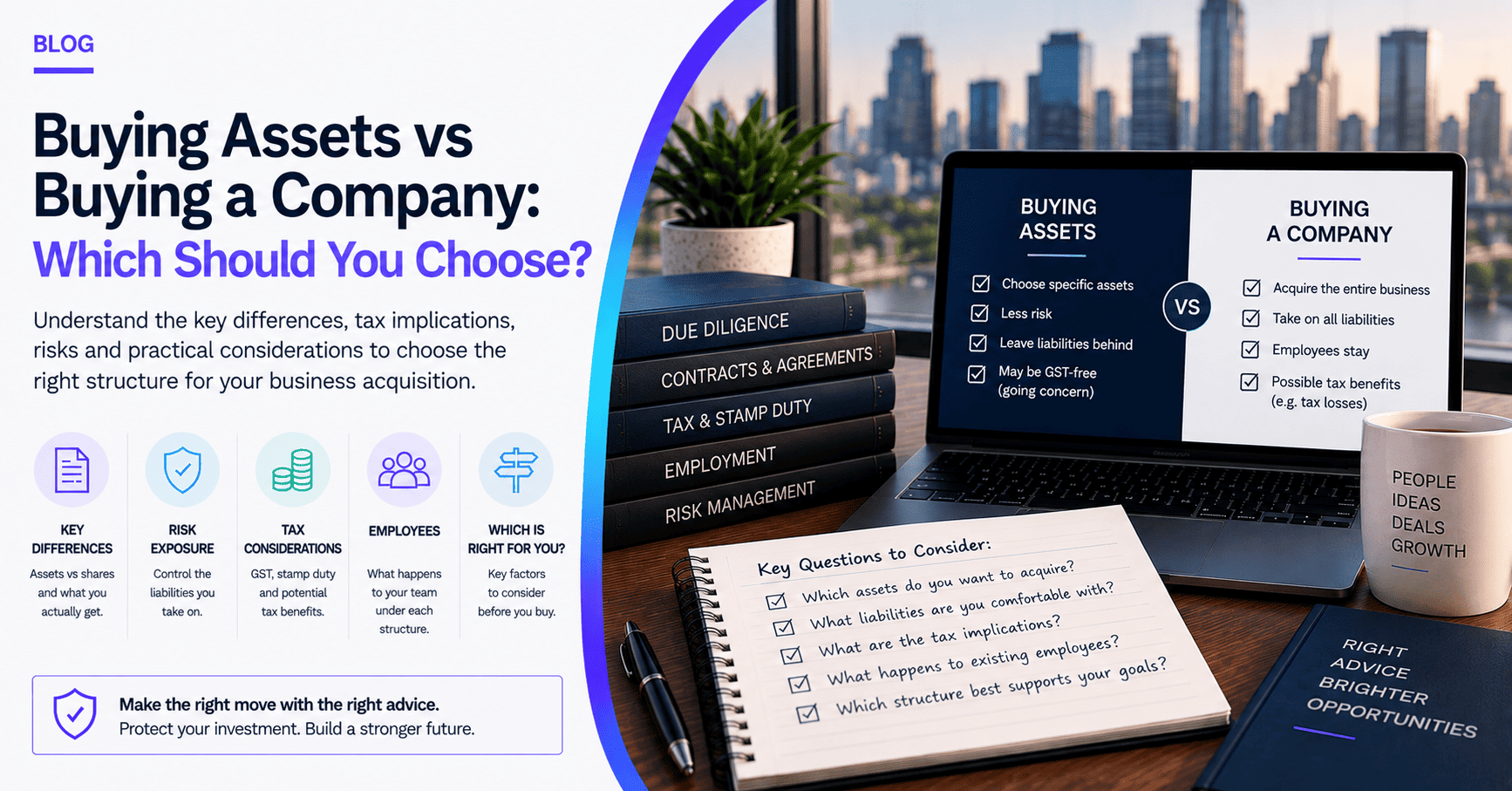
Buying assets vs buying a company is one of the first decisions you will face when purchasing a business. The structure you choose affects your tax position, your risk exposure, and even which employees you end up with. This guide explains the difference and helps you work out which option suits your situation.
Shares or Assets: What Is the Difference?
When you buy a business, you have two options. You can buy the shares in the company that runs it, or buy the assets it uses. A share purchase is bought from the shareholders. An asset purchase is bought from the company itself.
If the business operates as a sole trader or a partnership, there are no shares to buy. In that case, an asset purchase is the only option available.
Assets typically include plant and equipment, goodwill, business contracts, and any licences or approvals the business holds. As a general rule, buyers tend to prefer purchasing assets, while sellers tend to prefer selling shares. It pays to settle on a structure early. Switching partway through a deal can trigger significant extra legal and advisory fees.
Why Buyers Usually Prefer an Asset Purchase
An asset purchase lets a buyer choose exactly which assets to acquire and which liabilities to take on. Everything else stays with the seller. This means unidentified risks and liabilities generally do not pass to the buyer. That is the single biggest advantage of buying assets rather than shares.
A share purchase works differently. The buyer takes over the entire company, including anything hidden in its history. This makes thorough due diligence essential before signing. Warranties from the seller offer some protection, but that protection can become worthless if the seller becomes insolvent after completion. For this reason, buyers sometimes hold back part of the purchase price as security against undisclosed liabilities. Pursuing a claim under a warranty or indemnity can also be slow and expensive. For that reason, it is rarely a buyer’s first choice of protection.
Why Sellers Usually Prefer a Share Sale
A share sale gives the selling shareholder a clean, complete exit from the company. This is the main reason sellers usually prefer it over an asset sale. A well-advised buyer will still negotiate warranty and indemnity protection. This requires the seller to compensate the buyer for certain risks that surface after completion. The parties usually agree these terms in advance, capped at a set period and dollar amount.
In an asset sale, the position reverses. The seller generally keeps the liabilities tied to the shares in the company. The buyer only takes the specific assets named in the contract.
Tax and Duty Considerations
Tax treatment often decides which structure makes sense. An asset sale can qualify as a GST-free going concern sale if it meets specific conditions in the GST Act. A share sale works differently, since shares count as a financial supply rather than a going concern. Stamp duty (also called transfer duty) varies by state too. Several states now exempt most business assets from duty unless real property is involved. Share transfers can still attract duty in some jurisdictions. Given how much this varies, it is worth getting specific tax advice before assuming either structure is more efficient.
What Happens to Employees?
Employment works differently under each structure. In a share sale, employees stay employed by the same company. Their leave balances, length of service, and conditions continue unchanged. In an asset sale, the buyer decides whether to offer jobs to existing staff. Some entitlements, like personal leave, can transfer automatically. Others, including redundancy pay and long service leave, may not transfer unless the parties specifically agree. If the buyer will not recognise an entitlement, the seller usually remains responsible for paying it out before completion.
When Might a Buyer Prefer Shares Instead?
A buyer will sometimes prefer to buy shares rather than assets. Common reasons include:
- Favourable tax outcomes, including access to the company’s existing tax losses.
- Preserving contracts and licences that are hard to transfer, such as a lease over the business premises.
- Keeping existing customer relationships intact, since an asset sale requires each contract to be individually assigned to the buyer.
- Commercial reasons for not wanting to alert suppliers, landlords, or customers to a change of ownership.
Making the Right Decision Early
Both structures carry genuine advantages and real trade-offs. This guide is only an introduction to the issues, not a substitute for advice on your specific transaction. Allied Legal’s commercial lawyers can guide you through the tax, employment, and risk issues involved. We can also help you settle on the right structure before negotiations go too far. We offer a free 30-minute initial consultation to help understand your needs.
Contact us today to seek specialist advice on your acquisition.
Frequently Asked Questions
1. What is the main difference between buying assets and buying a company?
Buying assets means purchasing specific items and rights from a business, such as equipment, contracts, and goodwill. Buying a company means purchasing the shares of the entity that owns those assets. This includes everything else attached to it, including any hidden liabilities.
2. Why do buyers usually prefer an asset purchase?
An asset purchase lets a buyer choose exactly which assets and liabilities to take on. Unknown risks generally stay with the seller, which makes an asset purchase less risky than buying shares in most cases.
3. Why do sellers usually prefer a share sale?
A share sale lets the seller exit the business completely and cleanly. The buyer takes over the company as it stands. The seller does not retain any ongoing liabilities tied to the business itself.
4. Does stamp duty apply differently to asset sales and share sales?
Yes, and the rules vary by state. Several states now exempt most business assets from duty unless real property is involved. Share transfers can still be dutiable in some jurisdictions. Check the current rules in your state before finalising a structure.
5. What happens to employees in an asset sale compared to a share sale?
In a share sale, employees remain employed by the same company, and their entitlements continue without interruption. In an asset sale, the buyer decides whether to offer employment to existing staff. Some entitlements may not transfer unless both parties agree.
Contact Allied Legal today at 03 8691 3111 or email hello@alliedlegal.com.au to talk through your situation.
This article is provided for general information only and does not constitute legal advice. You should obtain legal advice specific to your circumstances before acting on any information contained in this article.