Securing venture capital is a major step for many Australian startups. It can provide the cash injection needed to scale, innovate and enter new markets, but raising venture capital is not as simple as signing a cheque and moving on. It comes with legal steps, investor expectations and ongoing responsibilities that founders need to understand before they take the money, and getting the legal groundwork wrong early tends to cost far more to fix later than it would have cost to get right from the start.
This guide covers the essential legal considerations for raising venture capital in Australia, from structuring your company through to the agreements you will need in place.
What Is Venture Capital, and Why Do Startups Seek It?
Venture capital is funding provided by investors who specialise in high-growth businesses, typically in exchange for equity in the company rather than repayment as debt. For startups, it offers a way to grow quickly without taking on loans. The trade-off is that venture capitalists usually want a share of control in the business, along with the potential for a high return on their investment.
Structuring Your Company for Investment
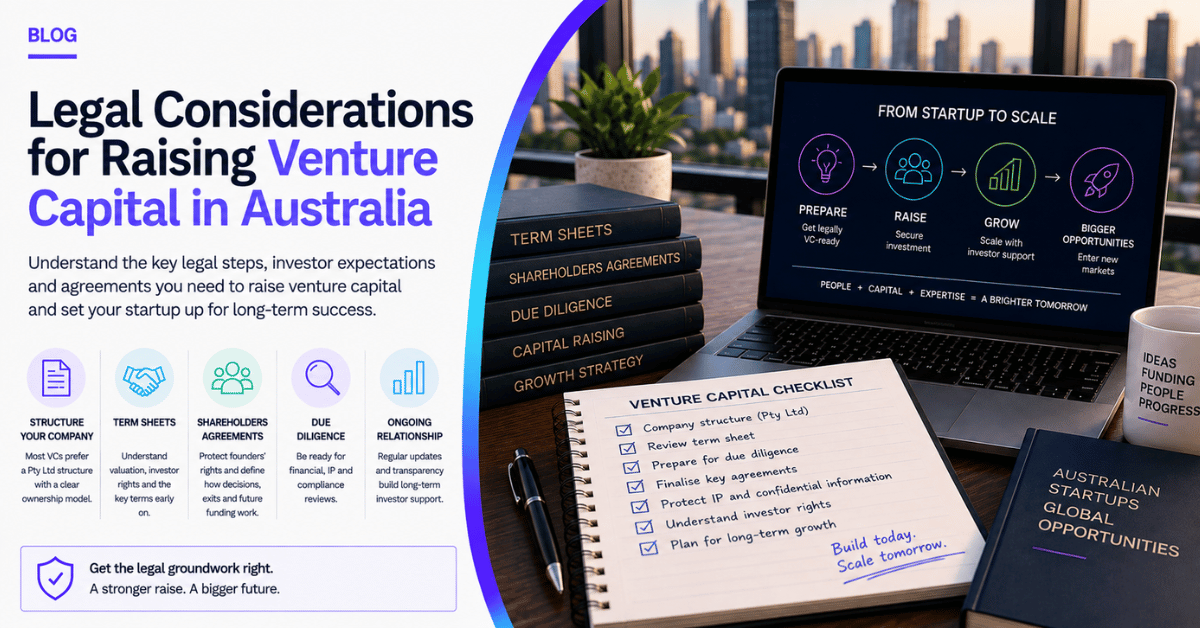
Most venture capitalists prefer to invest in a proprietary limited (Pty Ltd) company, since it allows for a straightforward ownership model, multiple shareholders, and limited liability protection, meaning investors are not personally liable for the company’s debts. If your business is not already structured this way, it is worth getting legal advice early to make sure your structure is genuinely VC-ready.
Understanding Term Sheets
A term sheet outlines the proposed investment terms before the final legal agreements are drafted. It is not legally binding, but it sets the tone for everything that follows, and covers valuation, share ownership and investor rights.
A few clauses deserve particular attention. Valuation determines the percentage of equity you give up in exchange for the investment. Board control and voting rights clauses may give investors seats on your board and a say in major decisions. Liquidation preferences determine who gets paid first, and how much, if the business is ever wound up or sold, and can often put investors ahead of founders. Working through a term sheet with a lawyer before you sign is one of the highest-value legal steps in the entire process.
Shareholders Agreements and Protecting Founders’ Rights
Once investors are on board, a shareholders agreement sets out the rights and responsibilities of everyone involved, founders and investors alike, and helps prevent conflict by defining how decisions get made and how an exit eventually works.
When reviewing a shareholder agreement, pay close attention to founder vesting provisions, which prevent a founder who leaves early from retaining a large long-term stake. You should also examine drag-along and tag-along rights, which regulate share sales when the company or a shareholder exits, as well as anti-dilution protections that protect investors if the company issues additional shares in a future funding round. Our detailed guide on why venture capital funds seek exit provisions covers this last point in more depth.
Legal Due Diligence
Before committing funds, investors will run a thorough review of your business, covering financial records, intellectual property ownership, and regulatory and tax compliance. Getting your own house in order before due diligence starts, rather than scrambling once it begins, tends to speed up the process and makes your business a more attractive prospect. Our dedicated guide to due diligence for startup founders walks through exactly what to prepare.
Investor Relations After the Raise
Raising venture capital is not a one-off transaction. Investors will expect regular updates, often quarterly, and many will want some involvement in strategic decisions. Being transparent about setbacks as well as achievements, and genuinely engaging with the expertise and networks your investors bring, builds the kind of relationship that makes future funding rounds easier.
Key Agreements You Will Need
A typical venture capital raise involves several distinct documents: a term sheet setting out preliminary terms, a shareholders agreement governing the ongoing relationship between shareholders, a subscription agreement recording the terms on which investors buy their shares, employment contracts for key team members, an intellectual property assignment agreement confirming the company owns IP created by staff and contractors, a non-disclosure agreement to protect confidential information shared during the raise, an equity incentive plan if you are offering options to employees, and a convertible note agreement if part of the raise is structured as debt that converts to equity.
Seek Legal Advice Early
Raising venture capital in Australia is an exciting but genuinely complex process. Understanding the legal steps involved can save real headaches later and help set up a healthy long-term relationship with your investors. Working with lawyers who understand the Australian startup landscape can make a meaningful difference to how smoothly the raise goes, and how well protected your business is afterwards.
Frequently Asked Questions
1. What is the difference between a term sheet and a shareholders agreement?
A term sheet outlines the proposed investment terms and is not legally binding. A shareholders agreement is the binding document that sets out the ongoing rights and responsibilities of everyone holding shares once the investment completes.
2. Why do venture capitalists want board seats or voting rights?
Investors often negotiate for board seats and voting rights so they can influence major business decisions and monitor how the company uses their investment. These rights become particularly important when investors hold a minority stake and have little day-to-day control over the business.
3. What should founders check for in a shareholders agreement?
Founder vesting, drag-along and tag-along rights, and anti-dilution protection are the clauses most likely to affect a founder’s control and ownership over time, so each deserves careful review before signing.
4. What do investors look for during due diligence?
Investors typically review financial records, intellectual property ownership, and regulatory and tax compliance, so having these areas in order before due diligence begins makes the process faster and your business more attractive.
5. Is a convertible note the same as an equity investment?
No. A convertible note starts as a debt instrument. It only converts into equity later, usually when the company completes a future funding round, rather than issuing shares to the investor immediately.
Working with legal experts who understand the Australian startup scene can make a significant difference, ensuring that your business is set up for growth and protected from common pitfalls.
Related Reading:
- Is Venture Capital Right for Your Startup?
- Due Diligence for Startup Founders
- Why Venture Capital Funds Seek Exit Provisions
- Demystifying Raising Capital in Australia: The Subscription Agreement Process
Useful Resources:
This article is provided for general information only and does not constitute legal advice. You should obtain legal advice specific to your circumstances before acting on any information contained in this article.