
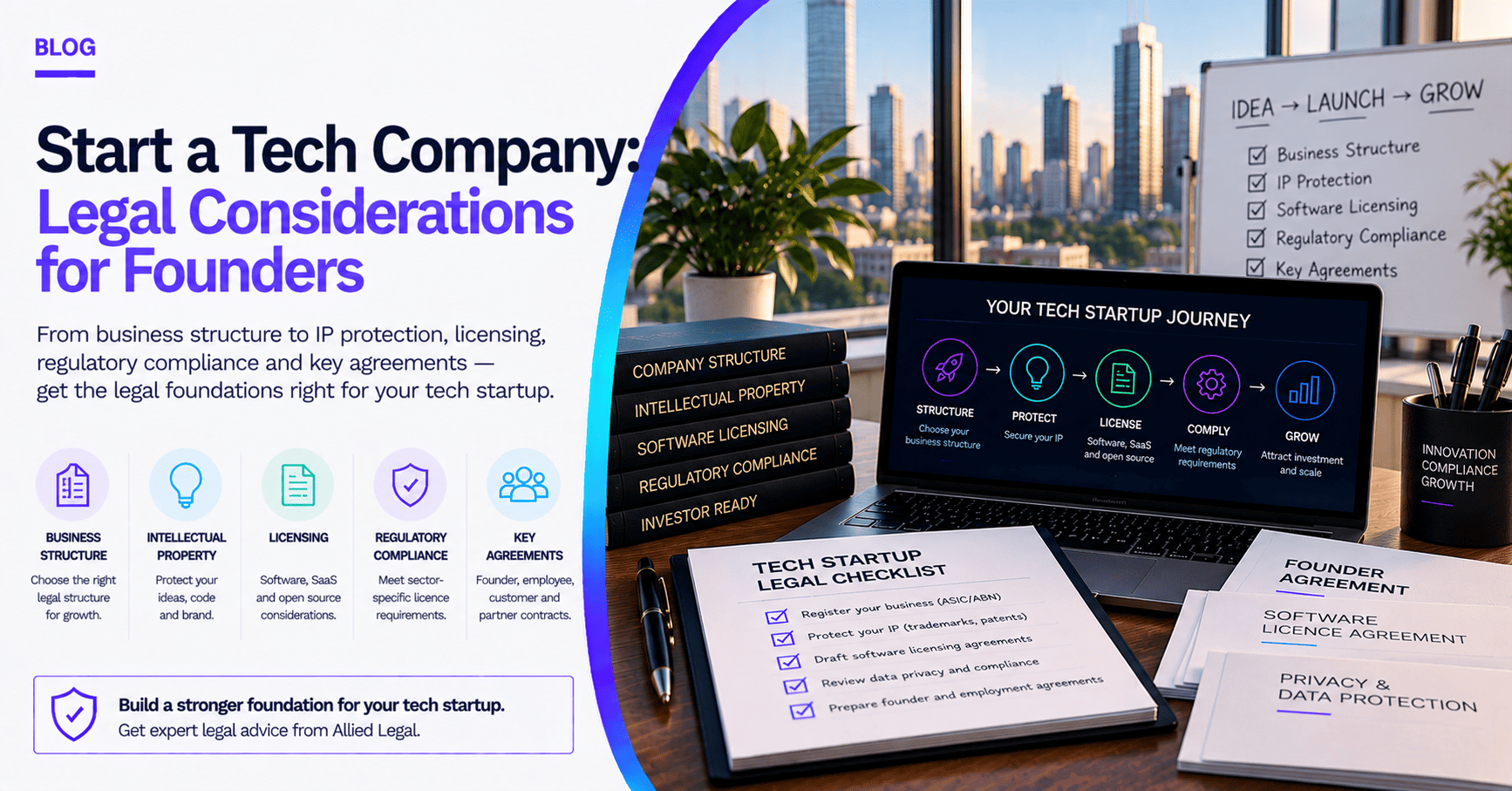
Starting a tech company in Australia means getting several legal foundations right early. This includes your business structure, your intellectual property, and increasingly, licensing. Licensing for tech startups covers several things. It covers how you licence your own software out to customers. It also covers how you handle third-party and open-source code you build on, and any regulatory licences your specific tech sector needs. Getting these wrong can be costly to fix later. This guide walks through the legal steps to start a tech company in Australia, with a close look at licensing along the way.
Choosing the Right Business Structure
Your business structure affects your personal liability, your tax position, and your ability to raise capital. A sole trader structure is simple, but you carry unlimited personal liability for the business. A partnership shares ownership and workload with co-founders. All partners are jointly liable for the business’s debts, though. Most tech startups choose a private limited company instead. This limits your personal liability and is generally more attractive to investors. Get professional advice on your business structure before you commit. Changing structure later can trigger tax and administrative costs.
Registering Your Tech Company
Once you have a structure, you need to register the business itself. You will need an Australian Business Number to deal with the ATO and other agencies. If you trade under a name other than your own, you must register it with the Australian Securities and Investments Commission. Check it does not infringe an existing trademark first. Securing a matching domain name early also protects your online presence before a competitor takes it.
Protecting Your Intellectual Property
Your ideas, code, and brand are often your tech company’s most valuable assets. Patents protect new products, processes, or technologies from being copied without your permission. This matters most for startups building novel software or hardware. Trademarks protect your business name, logo, and slogan, stopping others from trading on a similar identity. Copyright protects original work automatically, including your source code, website content, and design. An IP lawyer can guide you through filing patents and registering trademarks before you launch. Fixing a gap in your IP protection after a dispute starts is far more expensive than getting it right upfront.
Licensing for Tech Startups: Software, SaaS and Open Source
Licensing is central to how most tech companies actually make money. Rather than selling your software outright, you generally licence customers the right to use it. You keep ownership of the underlying IP throughout. A software or SaaS licence agreement needs to define the scope of use clearly. This covers named users, seats, and whether use is limited to internal business purposes or extends further. It should state plainly that you retain all IP in the software, including any custom configurations you build for a client. Warranties matter too. You can warrant that the software performs as described, but exclude broader implied warranties. You still need to meet your obligations under the Australian Consumer Law. Liability clauses should cap your exposure, often linked to fees paid, and exclude indirect losses, within the limits the Consumer Law allows.
Licensing works the other way too. Most tech products are built on third-party or open-source components, and each one comes with its own licence terms. Some open-source licences require you to release your own source code if you distribute a product built on them. This can be a serious problem for a startup planning to sell proprietary software. Check the licence terms of every significant dependency before you build your product around it, not after. Our guide to IP assignment and licensing covers how these agreements work in more detail.
Regulatory Licences for Specific Tech Sectors
Beyond software licensing, some tech businesses need a specific regulatory licence to operate at all. This depends on their sector. A fintech startup offering financial products or advice generally needs an Australian Financial Services Licence. It may instead operate under someone else’s licence as an authorised representative. A health tech startup may need to meet registration and consent requirements tied to how it collects and uses patient data. This mirrors the considerations for structuring a medical practice. Check the specific requirements for your industry early. Building a product around an unlicensed model can mean a costly rebuild later. Our regulatory compliance team can help identify what applies to your specific tech vertical.
Drafting Essential Legal Agreements
Clear agreements set expectations before problems arise. A founder agreement outlines each co-founder’s role, equity split, and how decisions and disputes get handled. It prevents most conflicts before they start. Employment contracts should address IP ownership, confidentiality, and any equity or bonus arrangements you offer staff. Contracts with customers, suppliers, and partners should define scope of work, payment terms, and each party’s legal responsibilities. This protects both sides if something goes wrong later.
Market Regulations and Data Handling
If your product collects customer data, you need to comply with the Privacy Act 1988 (Cth). This includes a compliant privacy policy and proper consent practices. It sits alongside, not instead of, any sector-specific licensing your business needs.
Commercialisation Risks and Investor Confidence
Taking a tech product to market carries financial, operational, and competitive risk. Research your market properly before launch. This helps you understand demand and any gaps a competitor has left open. Avoid scaling faster than your funding supports. Running out of runway mid-scale is a common cause of startup failure. Keep a clear financial plan with realistic cash flow forecasts. Investors will want to see a legally sound structure, protected IP, and clean licensing arrangements before they commit. Getting this right early makes your business easier to fund later.
Frequently Asked Questions
1. What does licensing mean for a tech startup?
It generally means granting customers the right to use your software, while you keep ownership of the underlying IP, rather than selling it outright. It also covers the licences you need for third-party or open-source components, and any regulatory licences your sector requires.
2. Do I need a software licence agreement if I run a SaaS business?
Yes. A SaaS or software licence agreement should define the scope of use and confirm you retain IP ownership. It should also set warranties that comply with the Australian Consumer Law, and cap your liability where the law allows.
3. Can open-source software create legal risk for my startup?
Yes. Some open-source licences require you to release your own source code if you distribute a product built on them. Check the licence terms of every significant dependency before you build around it.
4. Does every tech startup need a regulatory licence?
No, it depends on your sector. Fintech startups generally need an Australian Financial Services Licence or must operate under someone else’s. Other regulated sectors, such as health tech, have their own requirements.
5. What is the most common legal mistake tech founders make?
Treating licensing and IP protection as something to sort out later. Fixing a licensing or IP gap after a dispute starts is far more expensive than getting it right before launch.
6. Do I need a business structure before I register a business name?
Yes. Your business structure affects your liability and tax position. Settle this before you register a name or apply for an ABN.
Getting the legal foundations of a tech company right, especially around licensing, takes more than a generic template. Our team at Allied Legal helps tech founders choose the right structure, protect their IP, and draft software and SaaS licence agreements that hold up under Australian Consumer Law. We also help you check third-party and open-source licence risk before you build. On top of this, we help work out what regulatory licences your specific sector needs. Contact us at 03 8691 3111 or email hello@alliedlegal.com.au to get your tech company’s legal foundations right from the start.
This article is provided for general information only and does not constitute legal advice. You should obtain legal advice specific to your circumstances before acting on any information contained in this article.